MIE243: Dissections
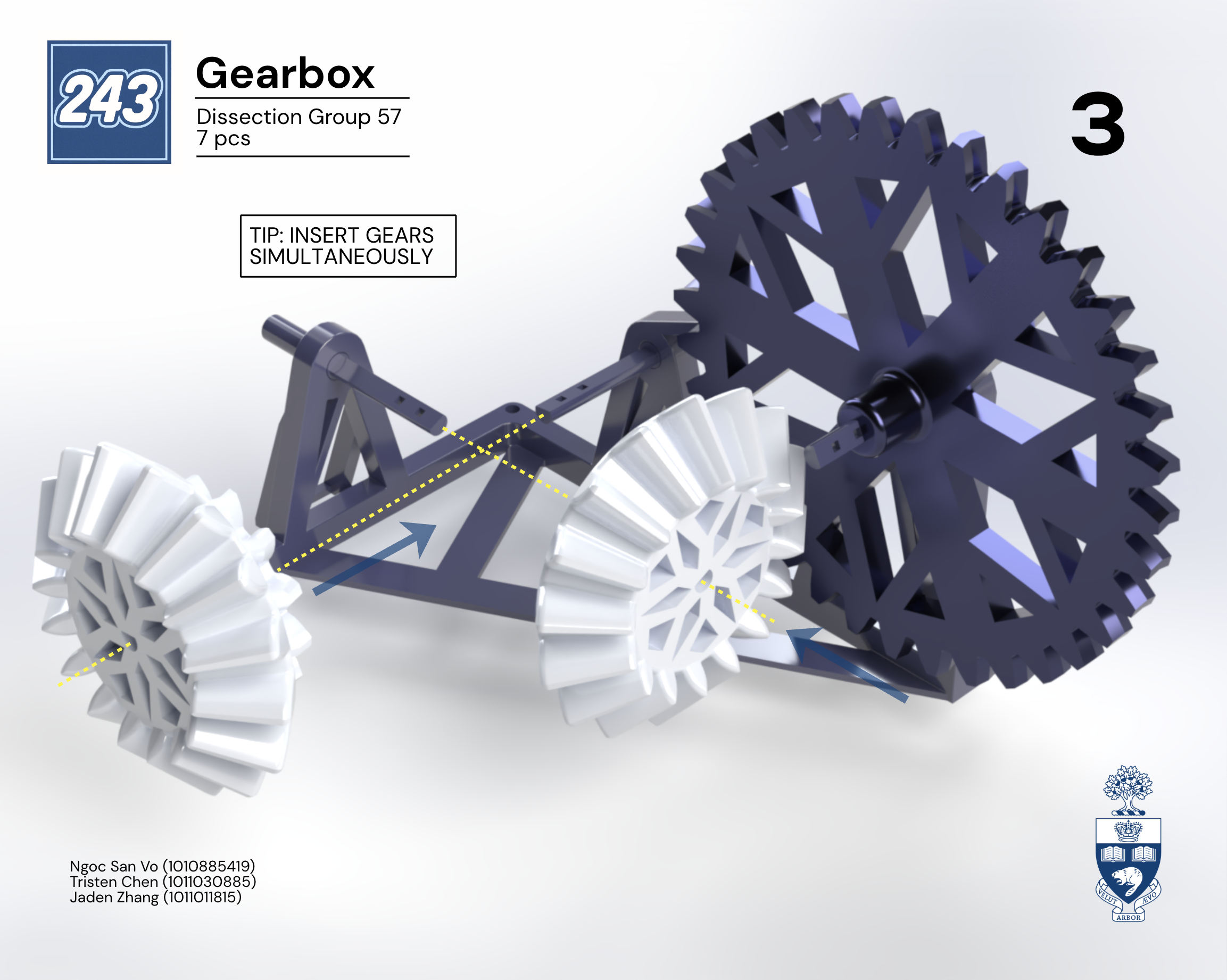
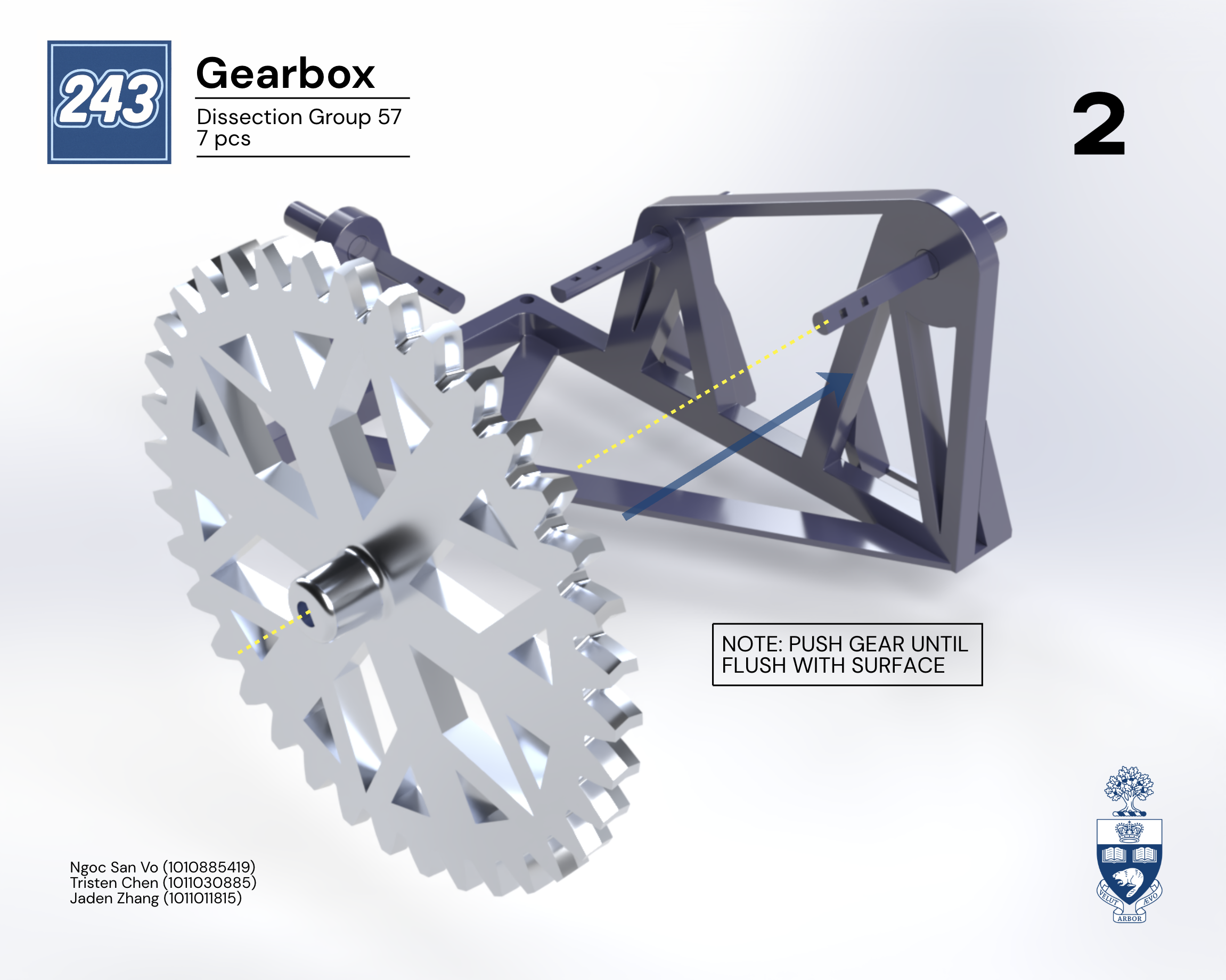
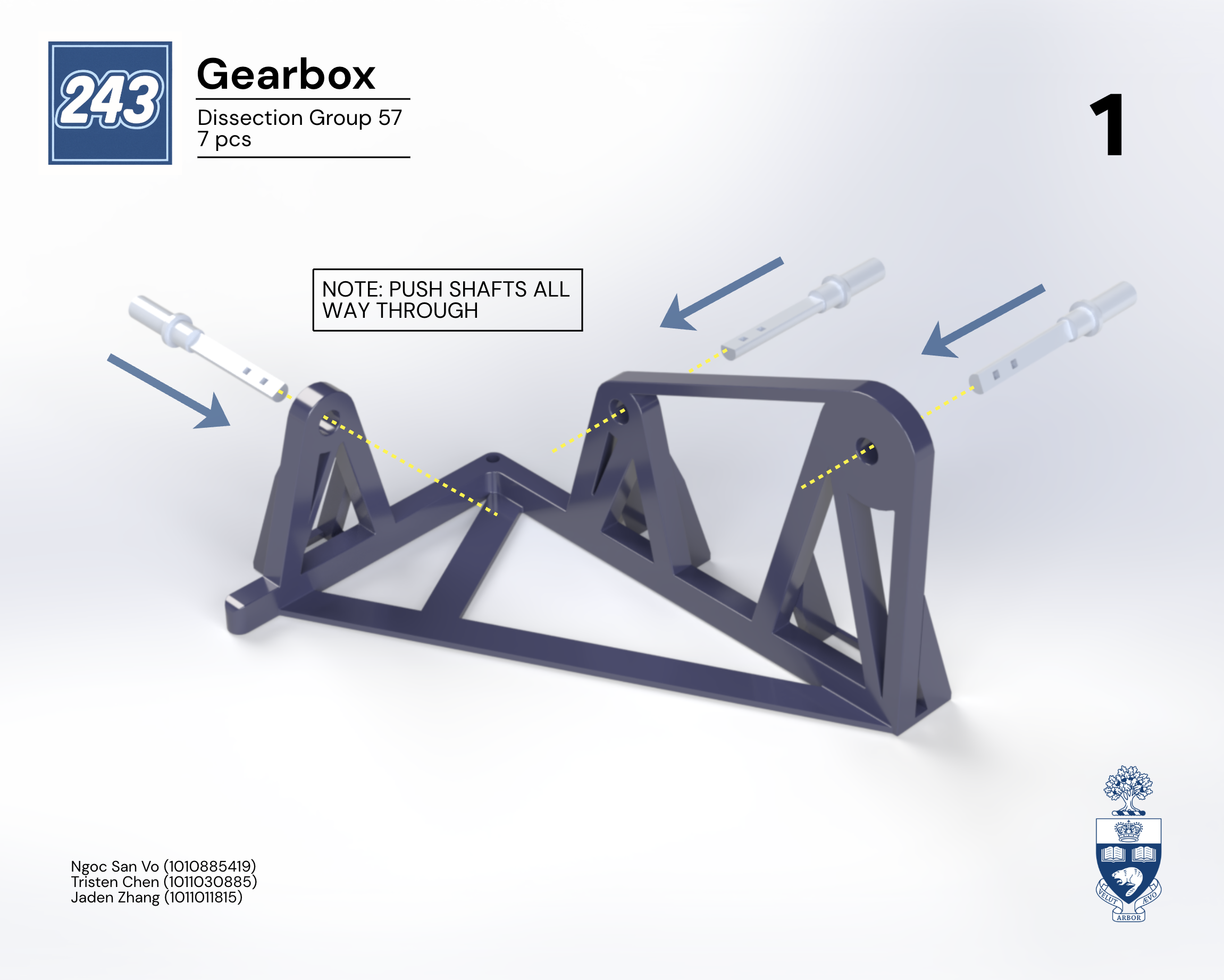
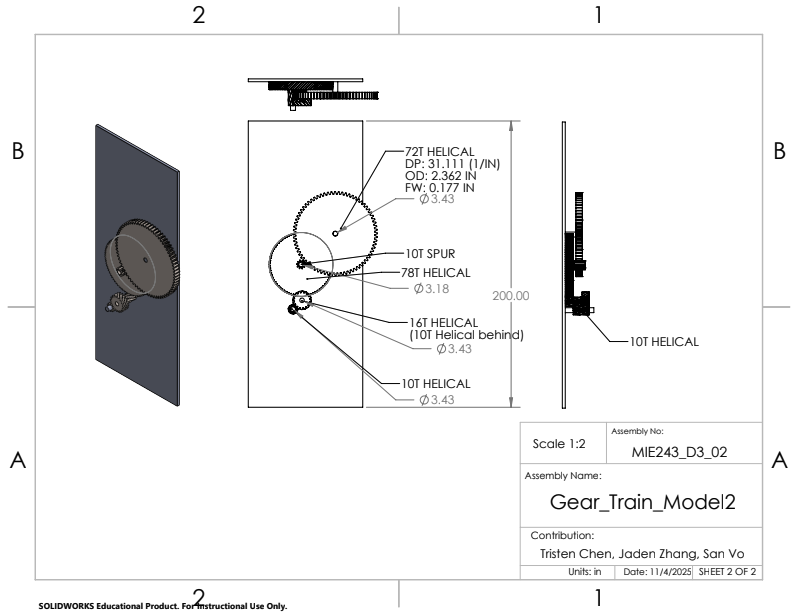
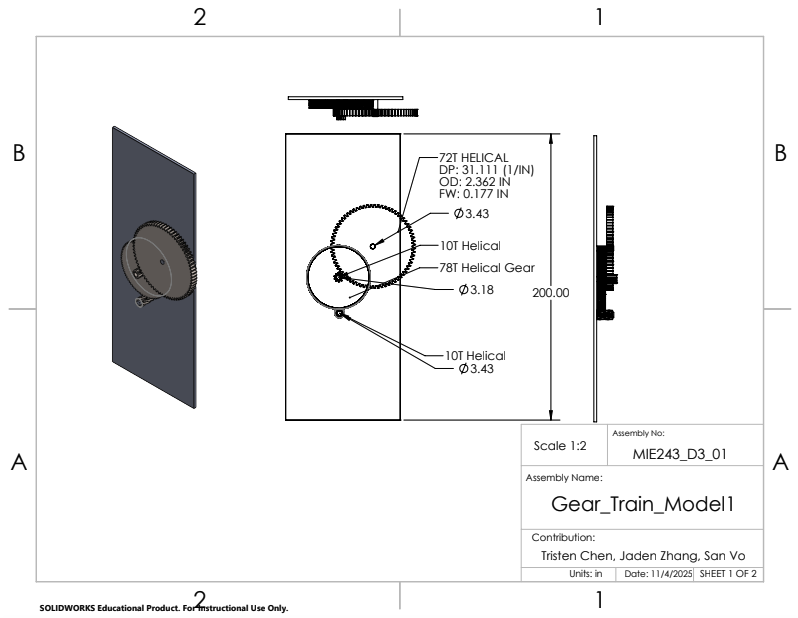
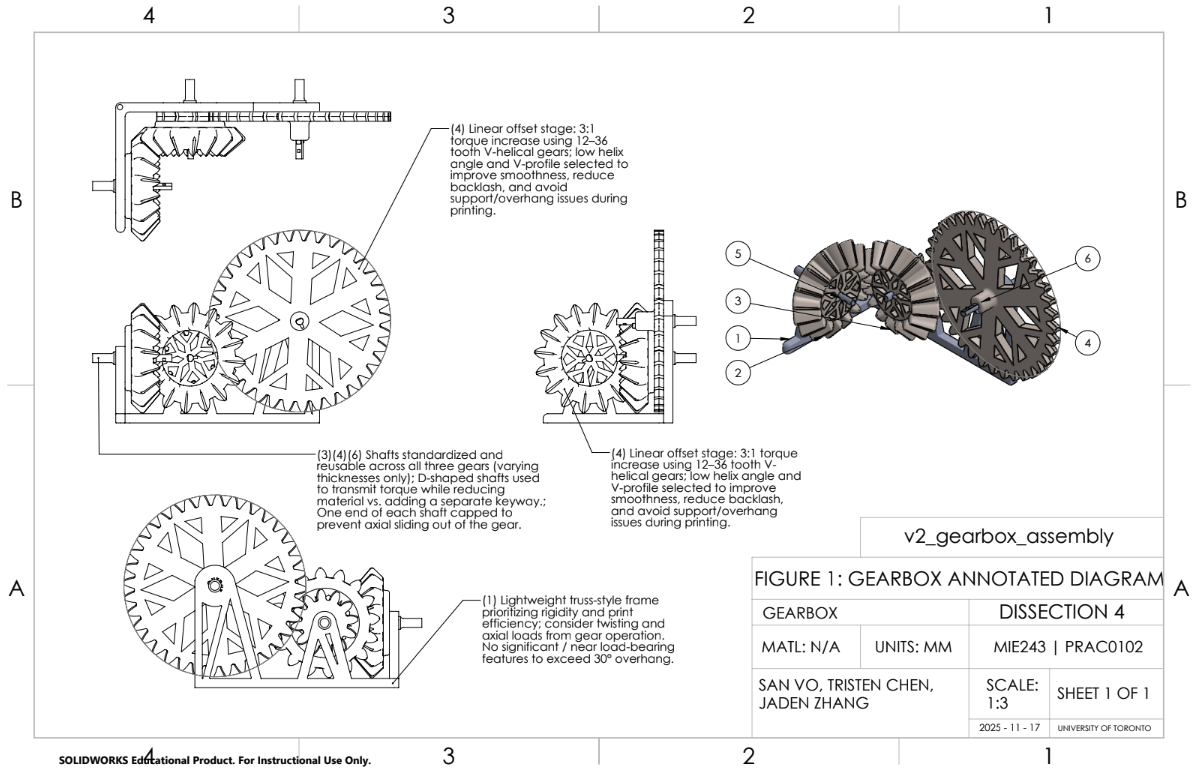
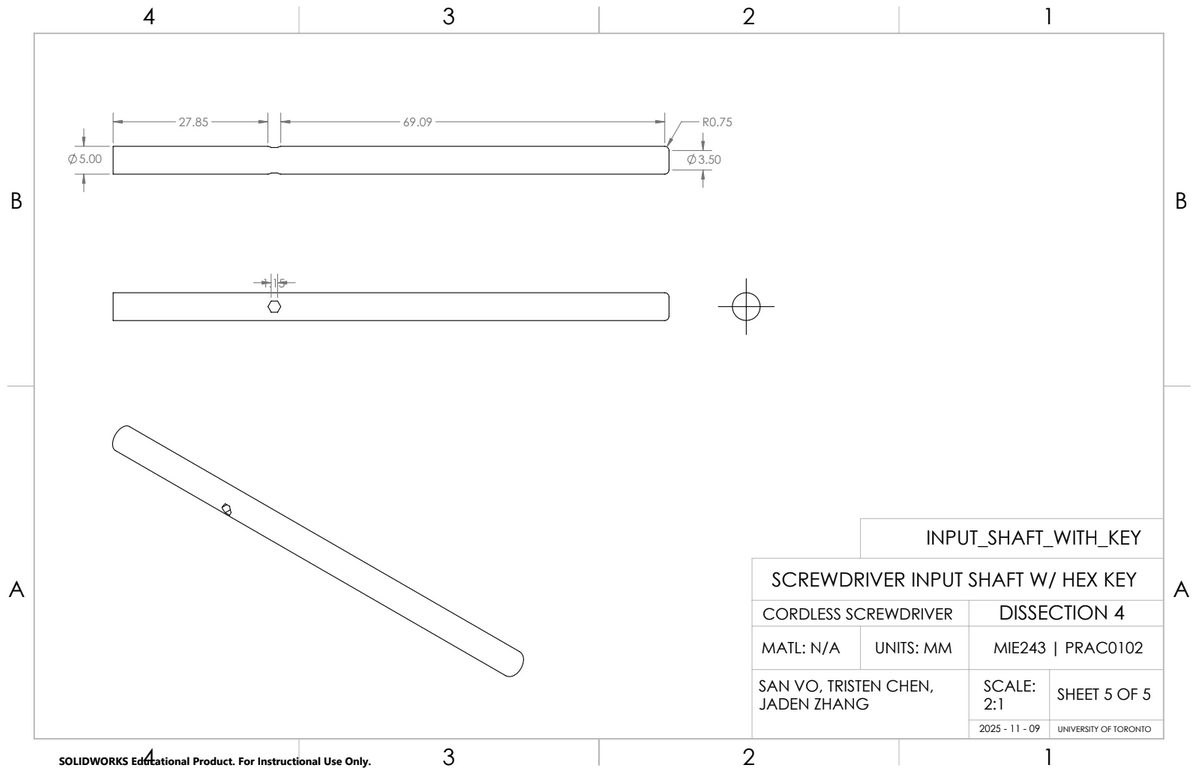
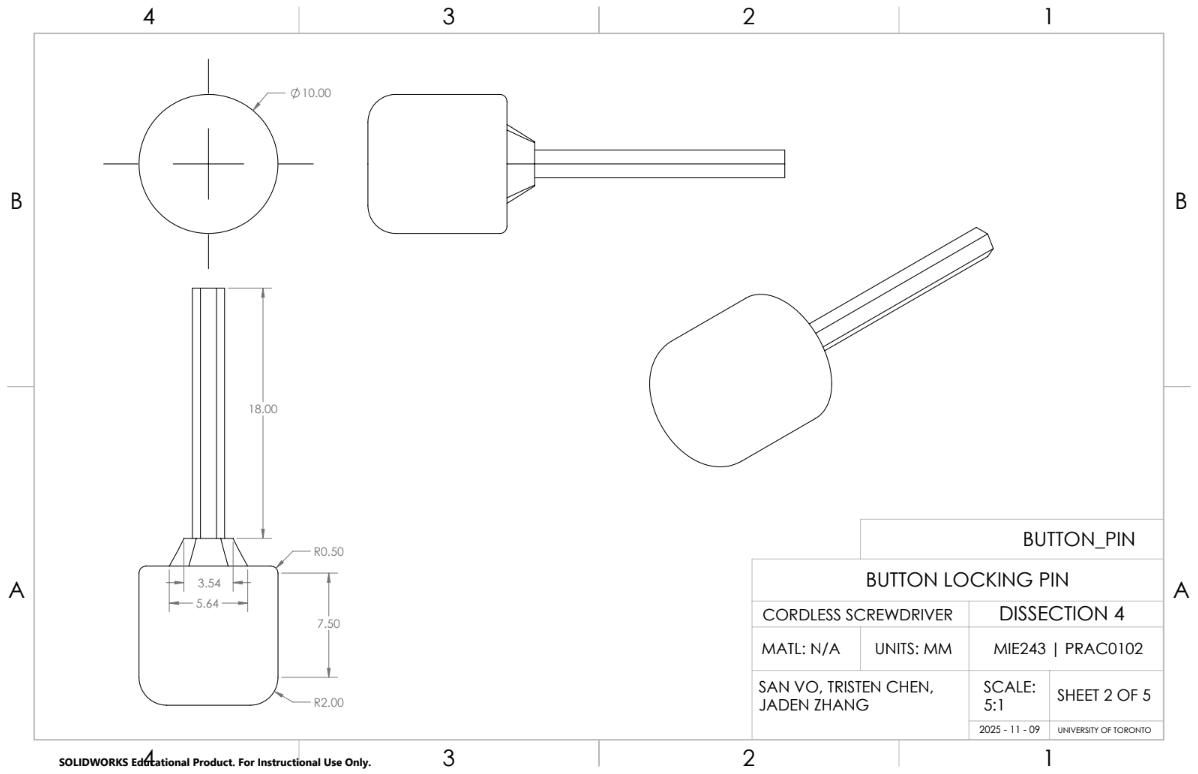
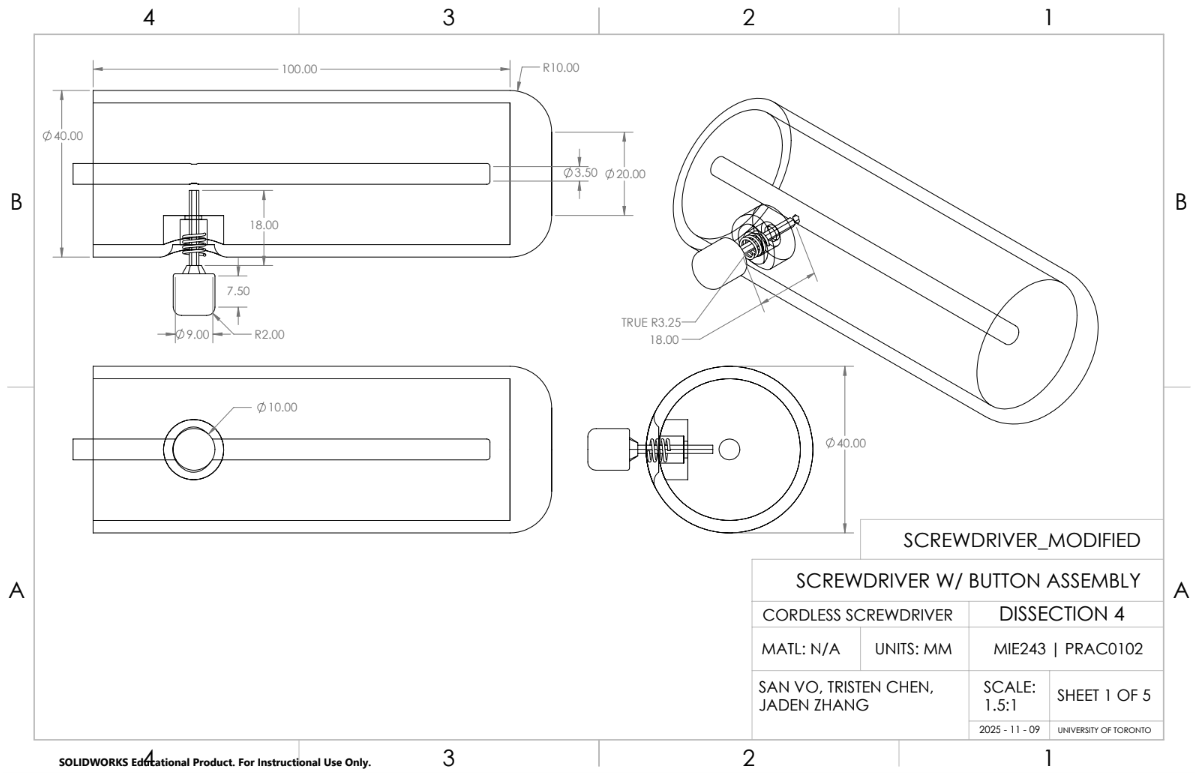
During my time taking MIE243: Mechanical Engineering Design, I had the chance to work with an incredible group to work on dissections—group assignments where we get to tear down real mechanical systems and redesign them to fit new specifications. This was a great opportunity to learn more about CAD—particularly Solidworks—and I’ve attached some of that work here.
This course strengthened my commitment to designing systems that are both technically rigorous and deeply intuitive. Dissecting products down to their smallest components—and then rebuilding them digitally—taught me to see engineering as a conversation between physics, materials, manufacturing, and user needs. It’s the same mindset I bring to my robotics, aerospace, and software work: build things that are mechanically elegant, explainable, and grounded in real engineering fundamentals.
What We Built & Analyzed
Screwdrivers: fastener interfaces, torque transfer mechanisms, bit retention systems, ergonomic considerations.
Gearboxes: planetary/compound gear trains, gear ratios, shaft support, bearing selection, lubrication paths.
Bearings: internal raceway geometry, ball/roller design, clearances, load cases, and fits.
Can opener assembly: multi-link cutting mechanism, gears, handle force analysis, manufacturability.
My Contributions
Modeled complex assemblies in SolidWorks, creating full part files, mates, exploded views, and engineering drawings.
Performed tolerance and fit analysis to understand how components interface under real load conditions.
Identified design inefficiencies and proposed improvements to durability, manufacturability, and user experience.
Helped prepare engineering drawings, bill of materials (BOMs), and design rationales for each teardown set.
Skills Developed
Advanced CAD: multibody modeling, mates, configurations, detailed drawings, tolerances.
Reverse engineering: translating physical mechanisms into full digital assemblies.
Mechanism design: gear trains, linkages, bearings, fasteners, and load paths.
Design communication: clear diagrams, annotated drawings, and presentation of redesign concepts.
