MIE243: 5-DOF Cinematography Arm: The Orbit 5
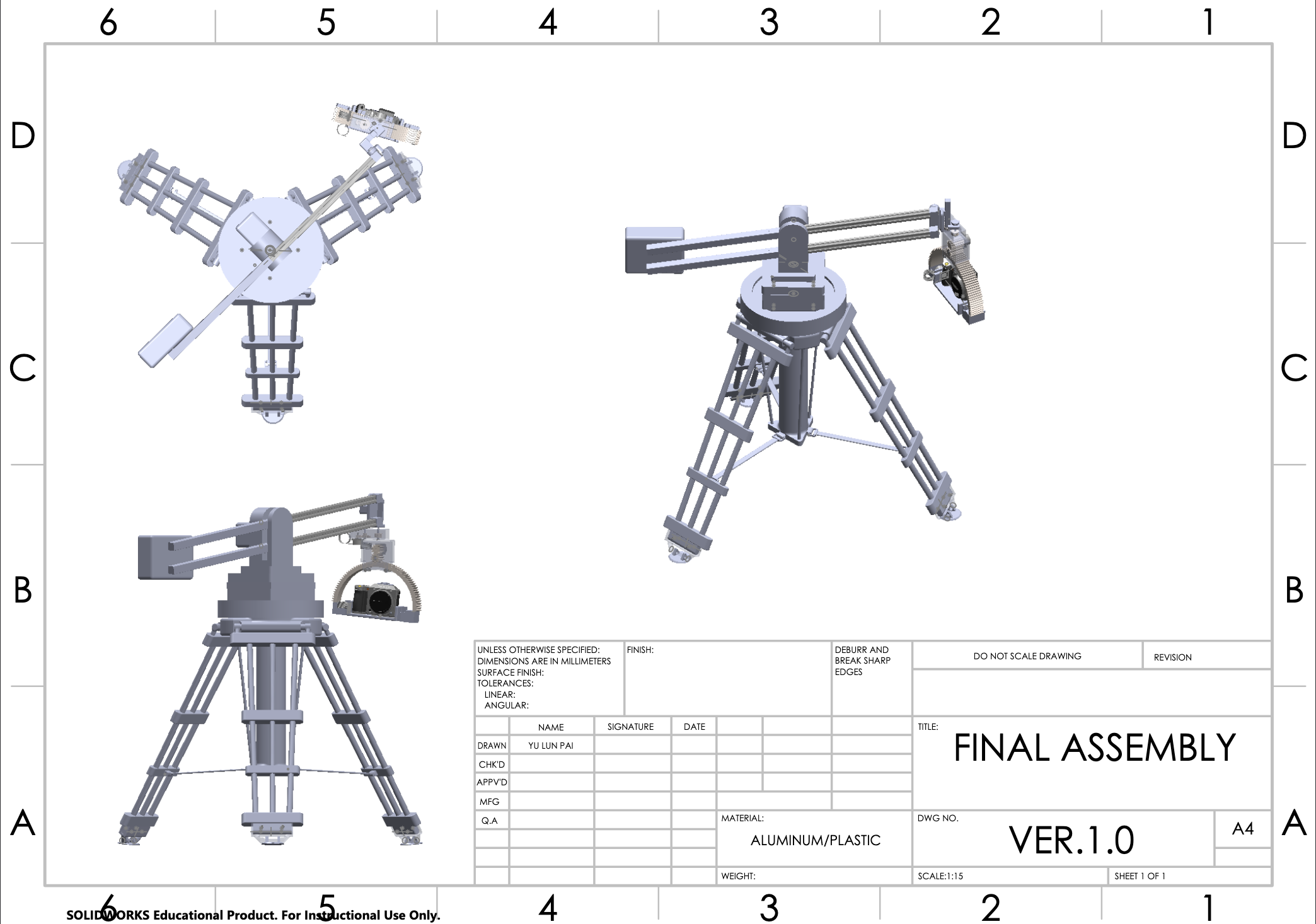
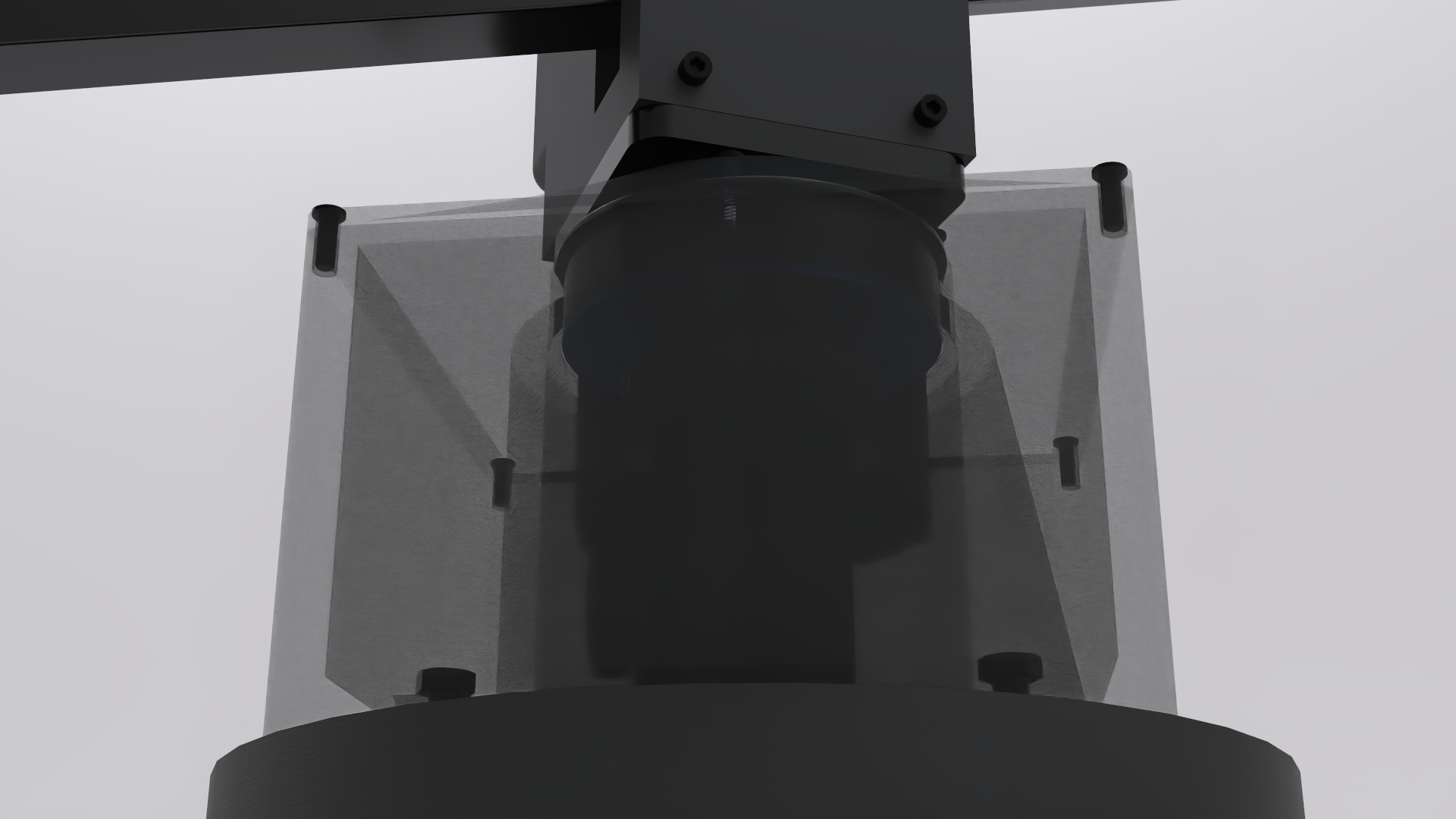
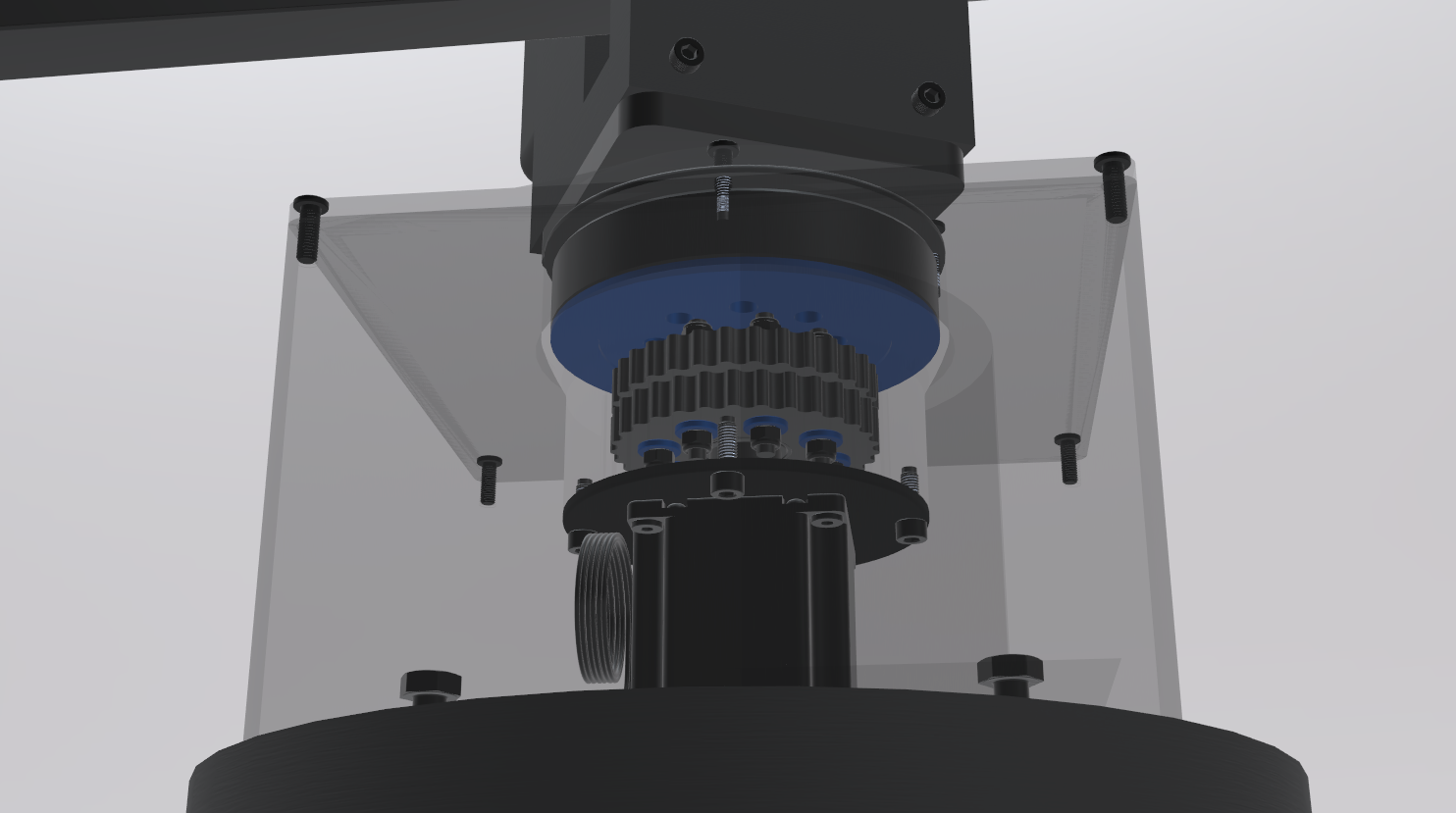
Custom 30:1 cycloidal drive

Objective
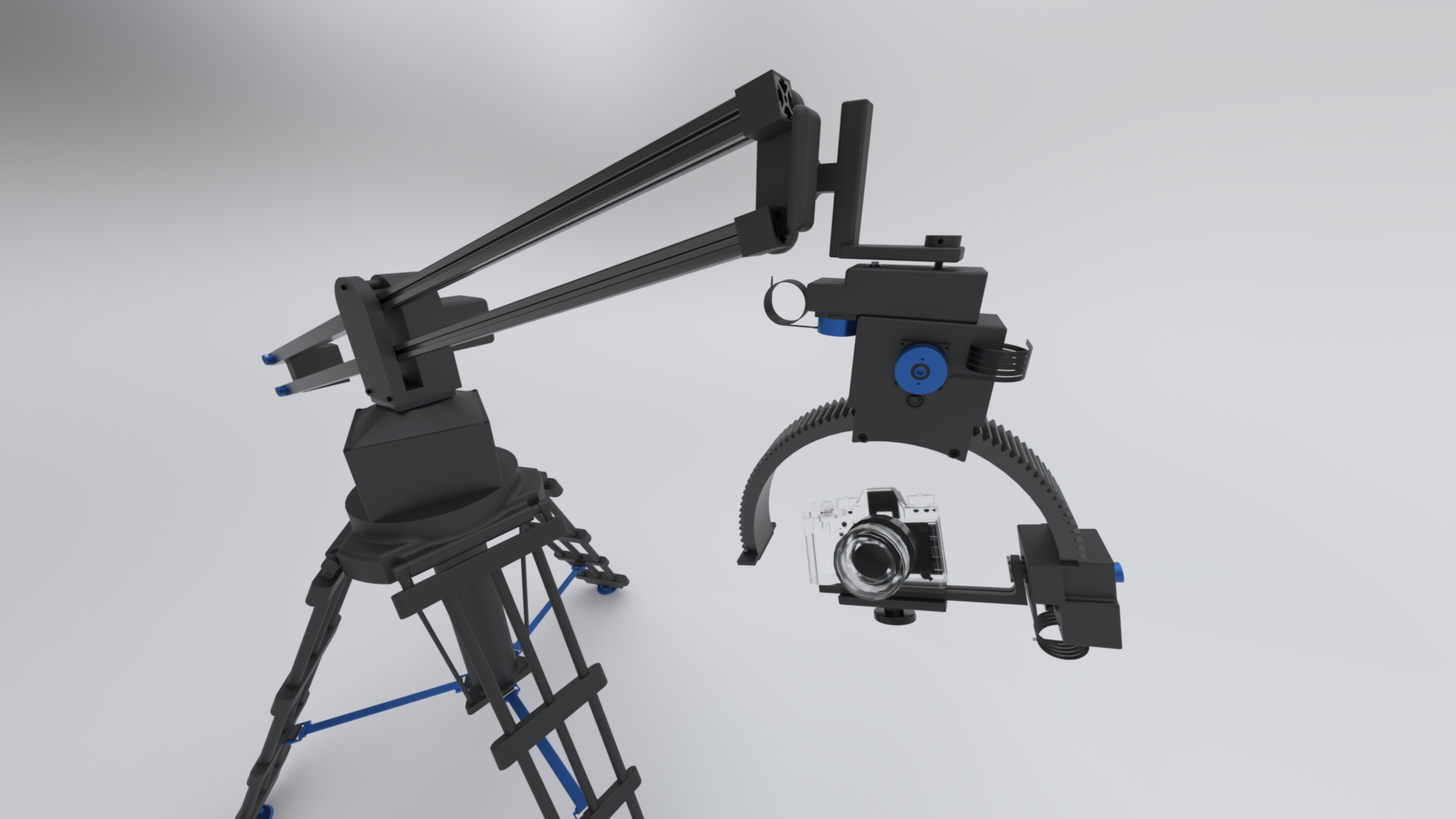
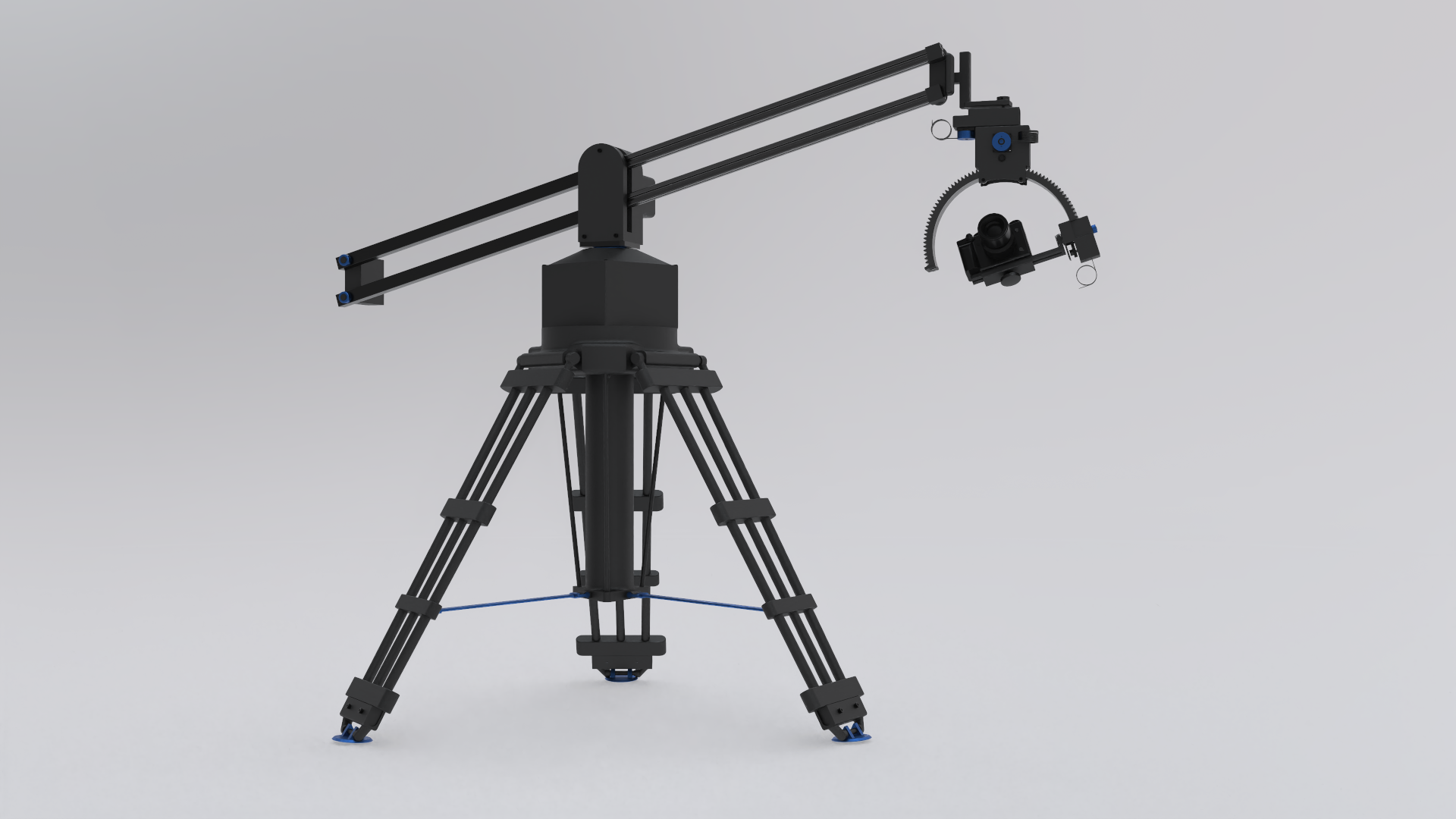
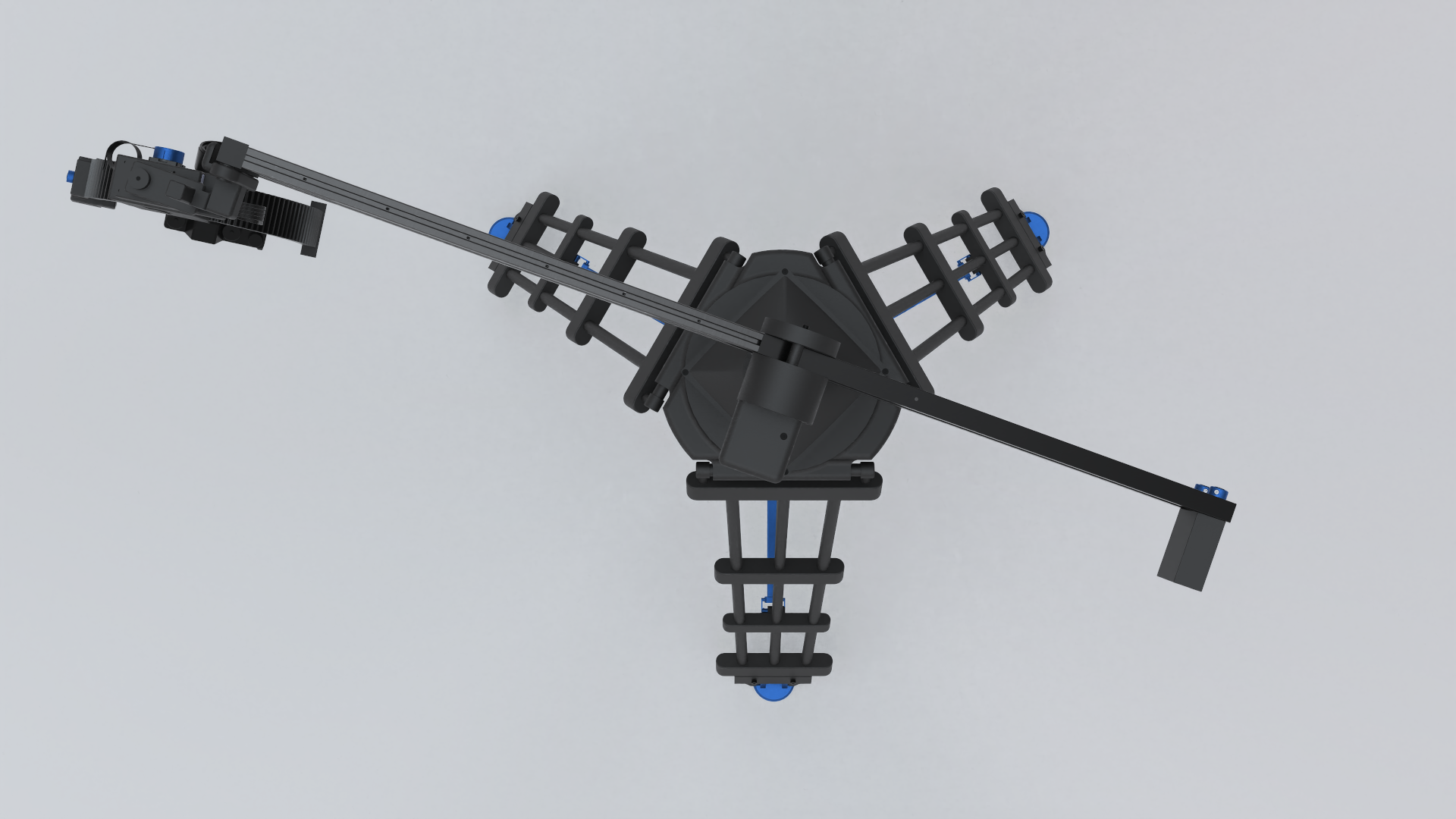
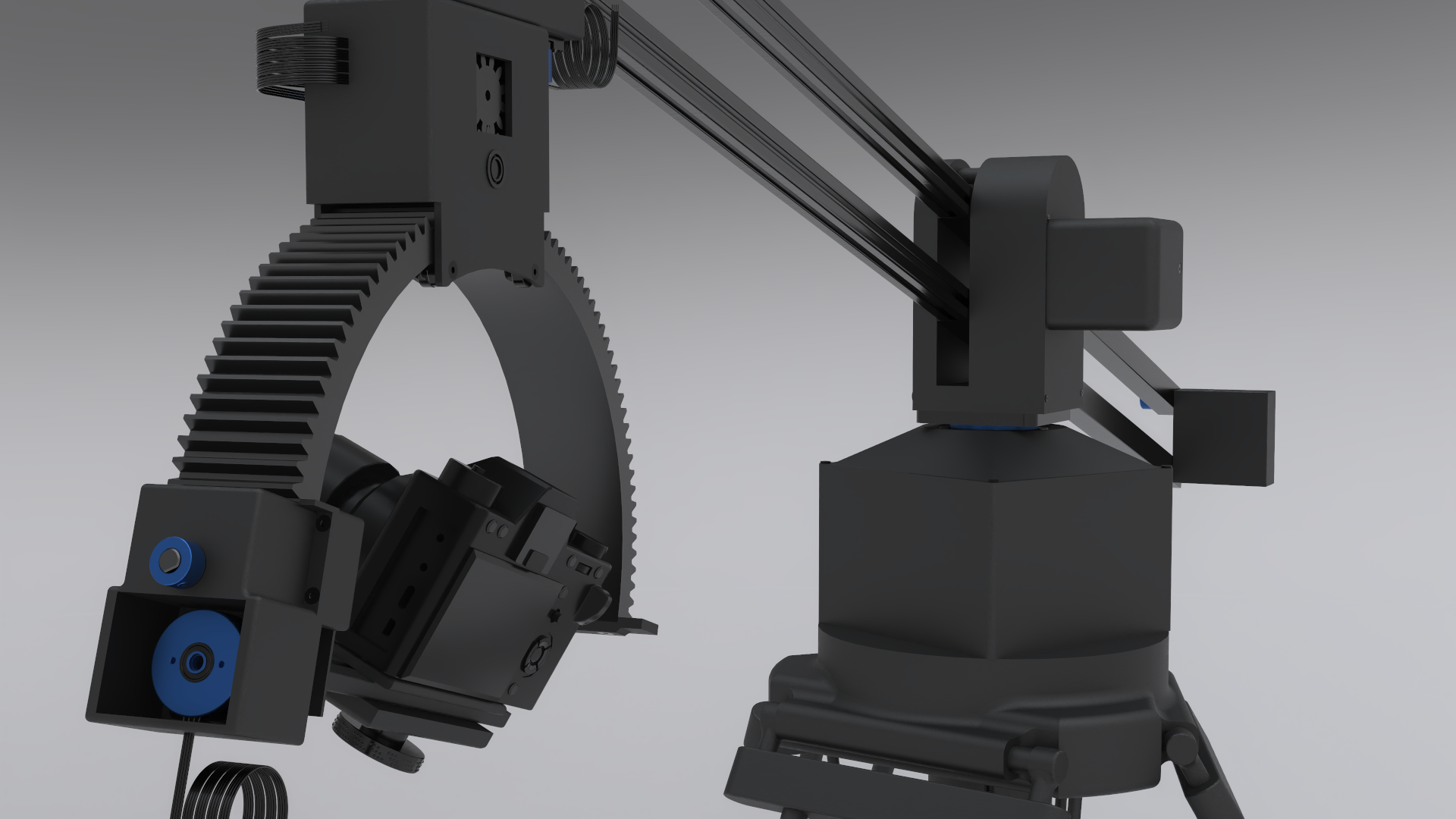
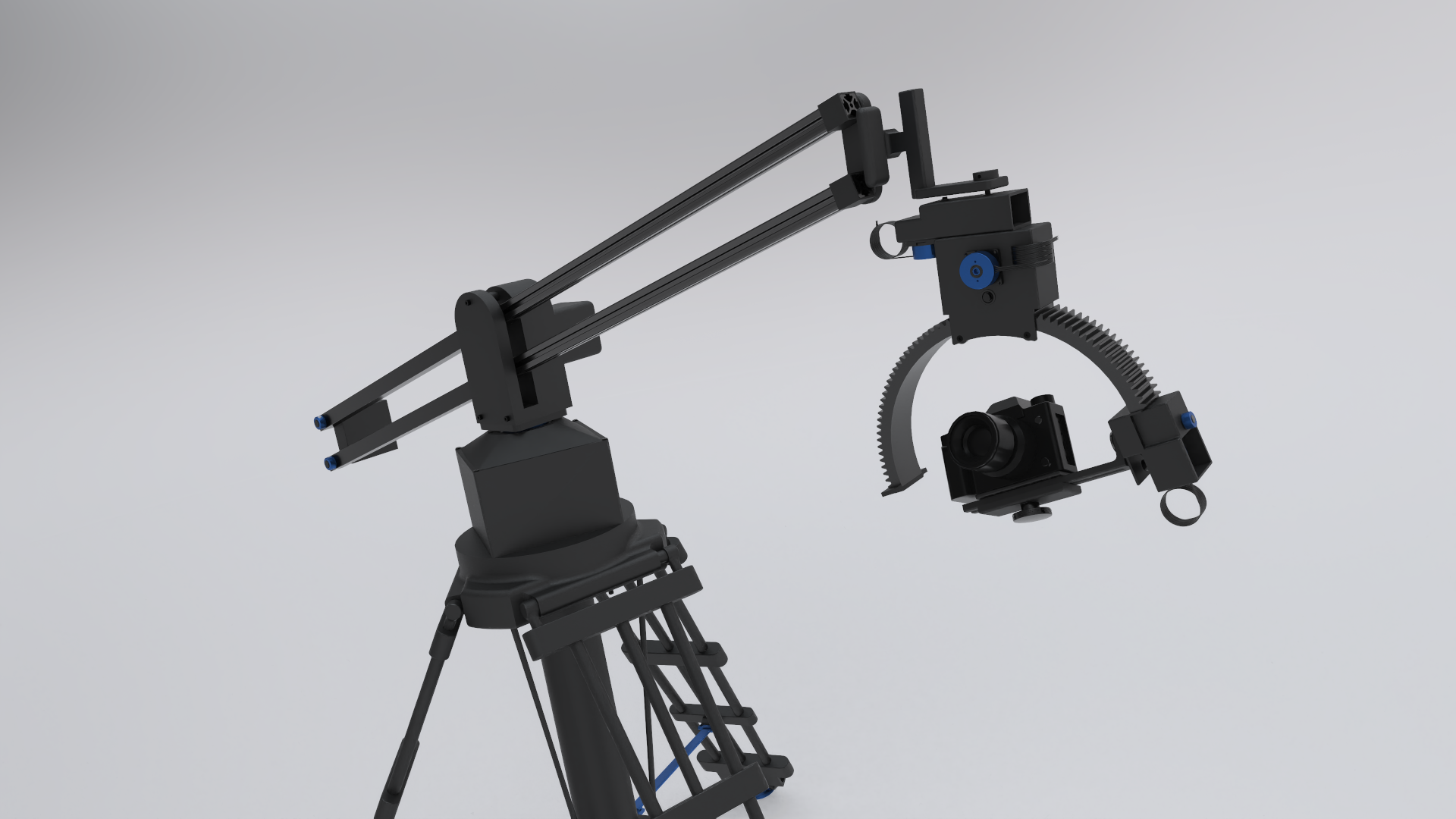
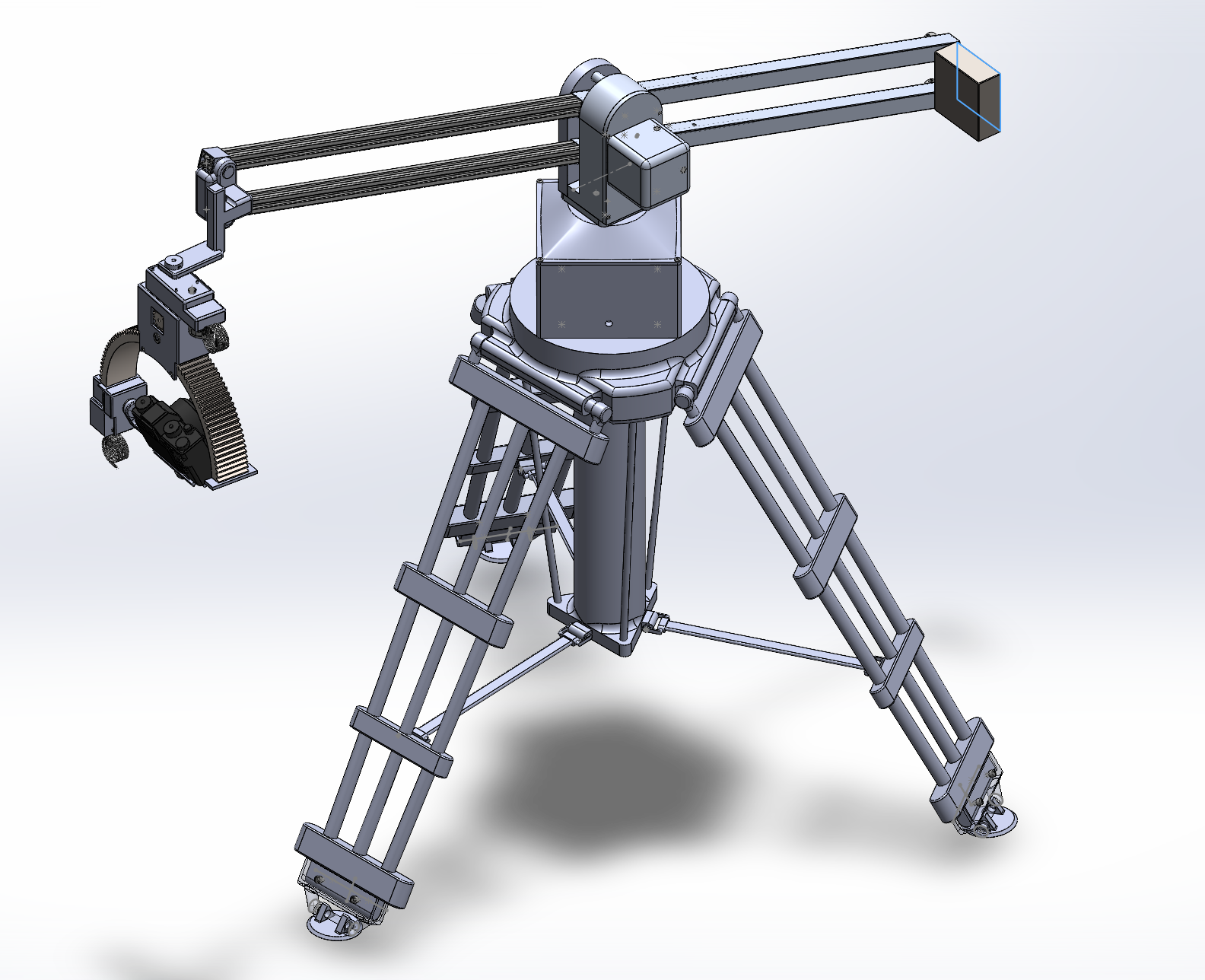
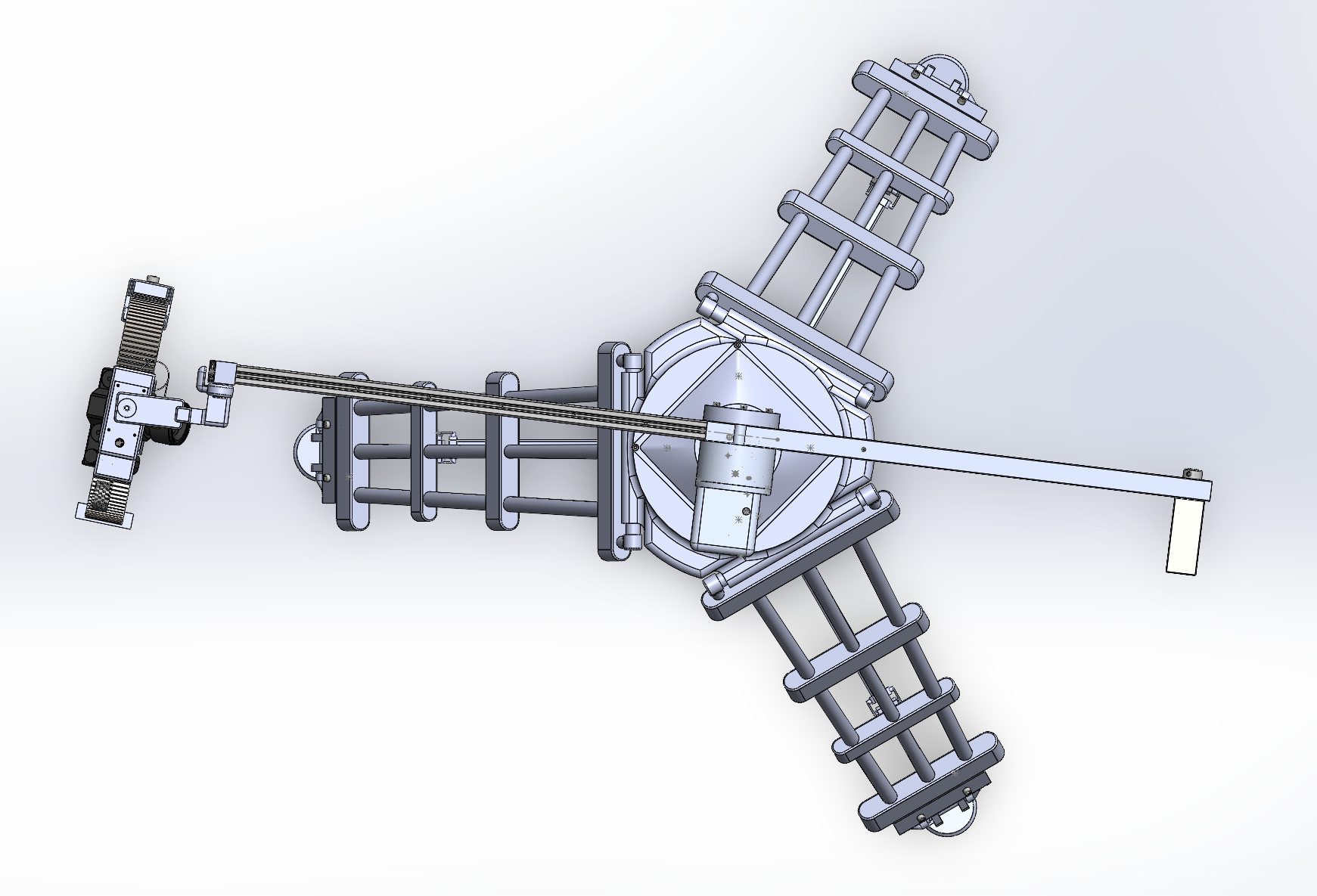
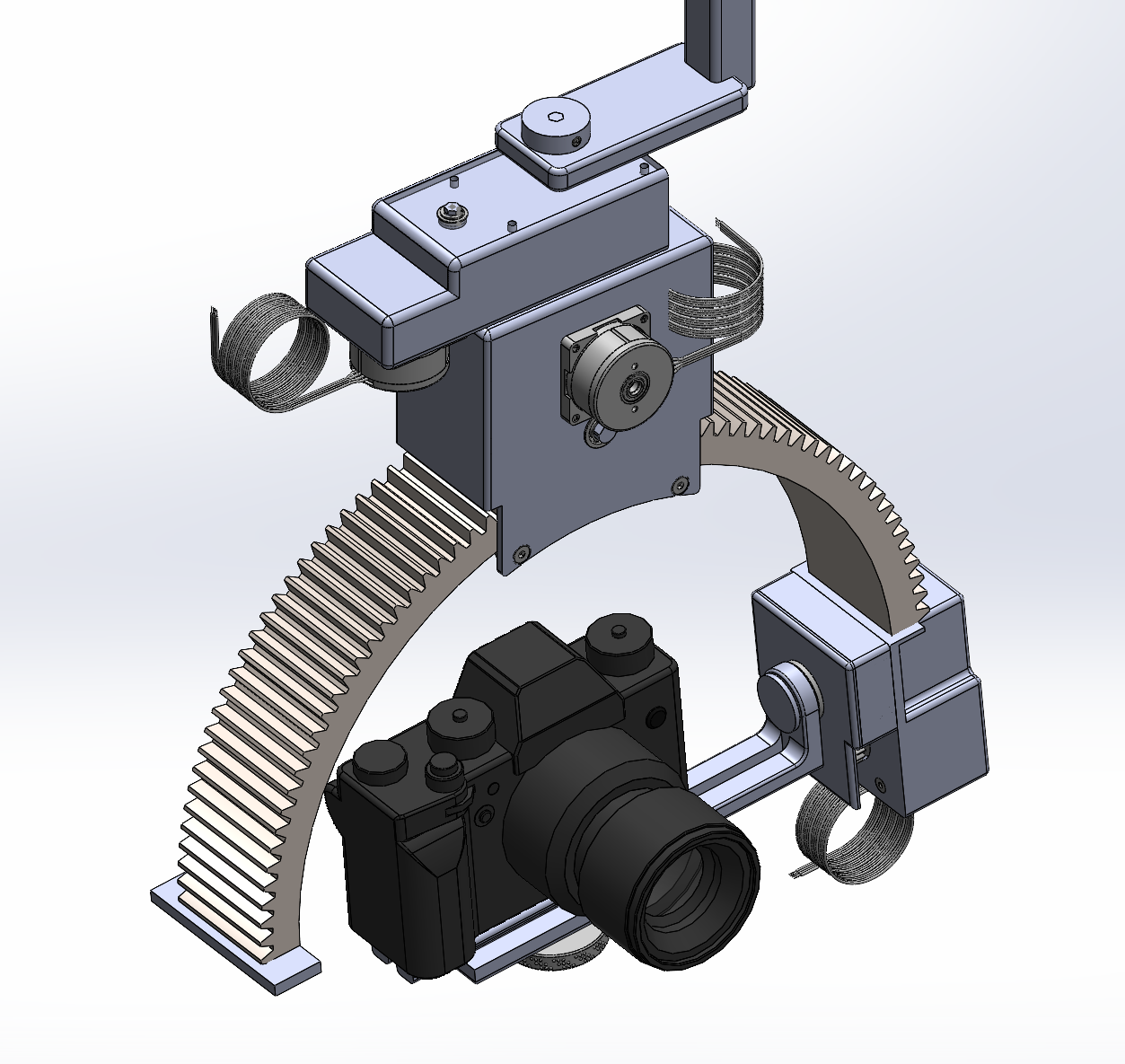
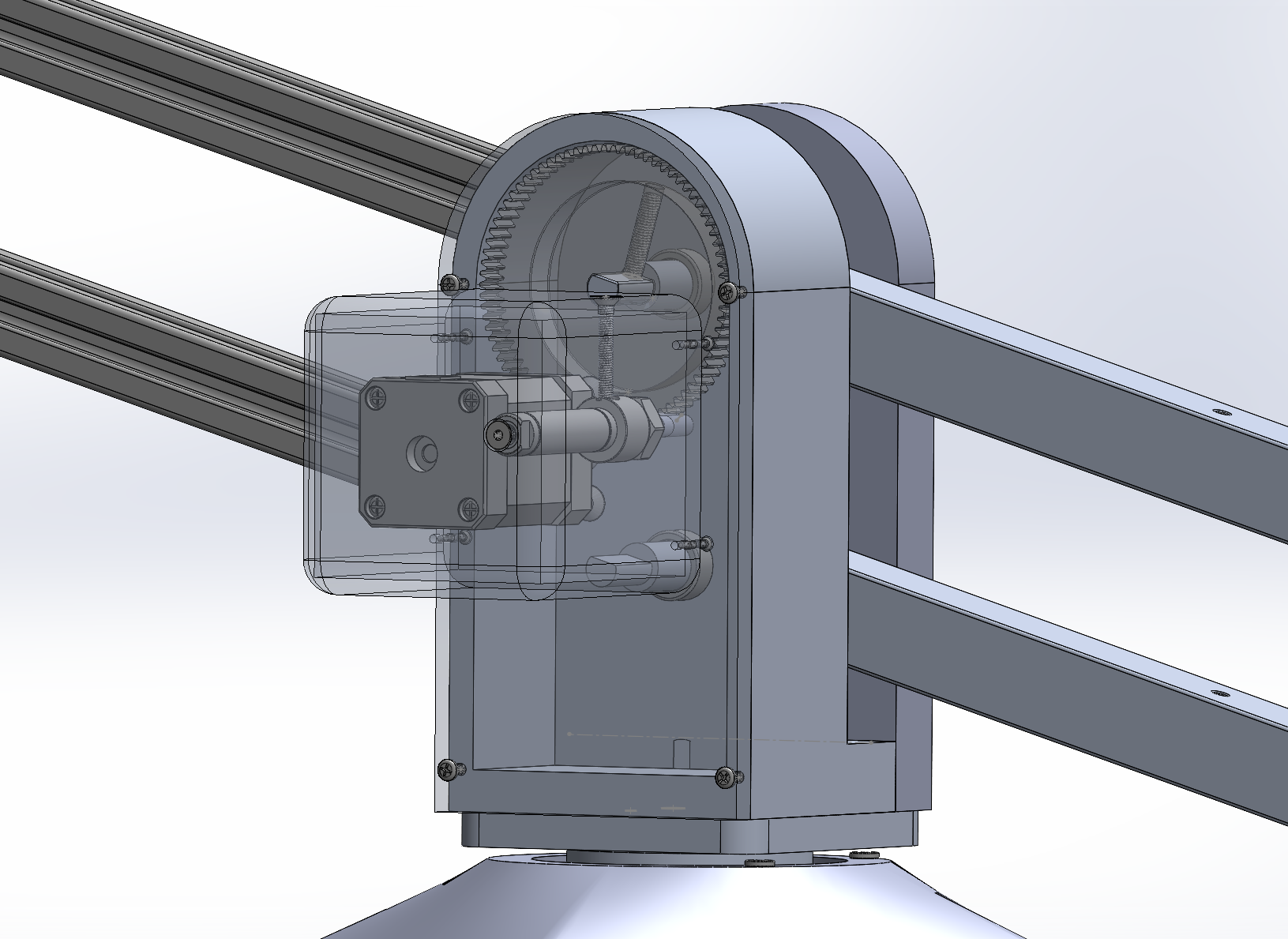
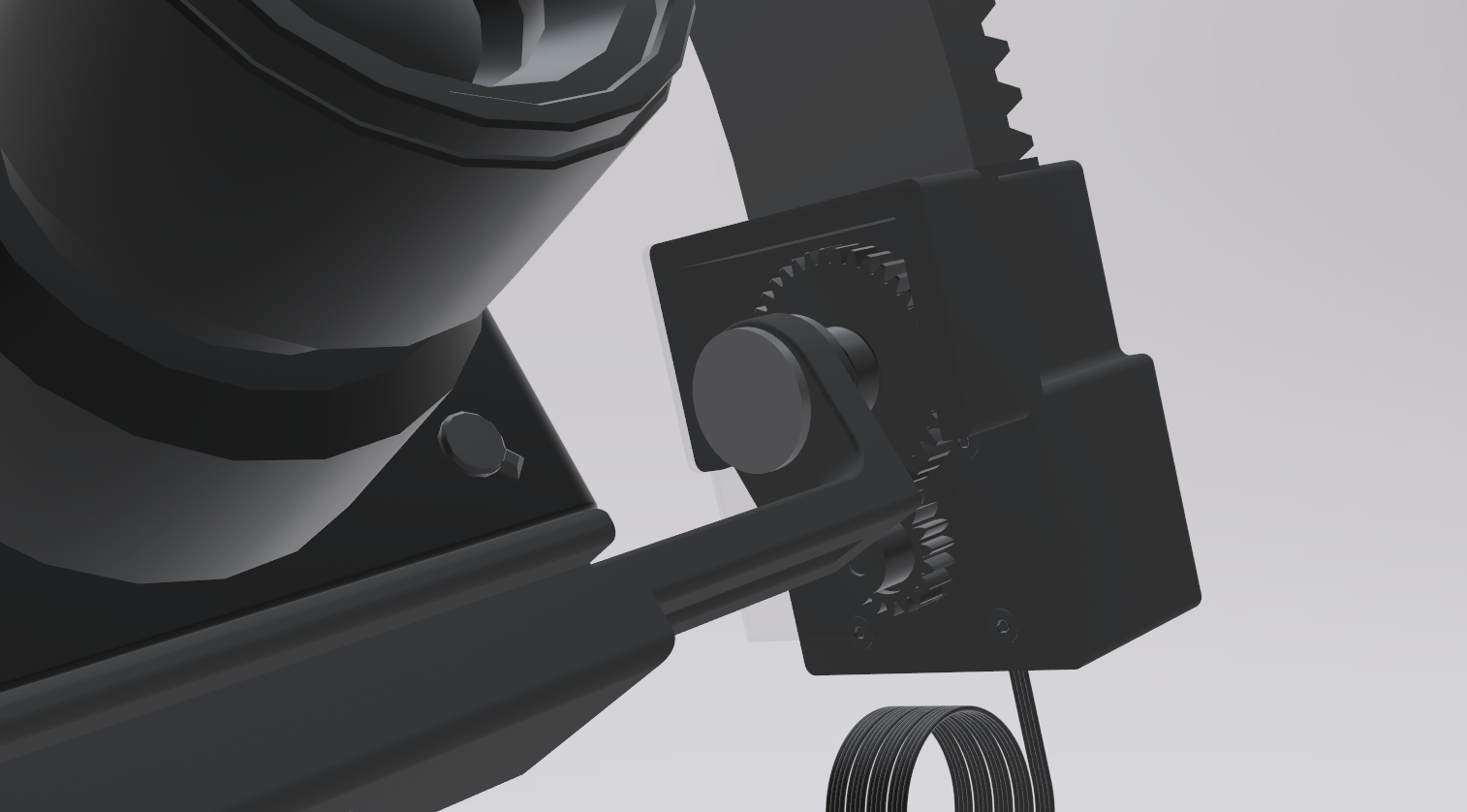
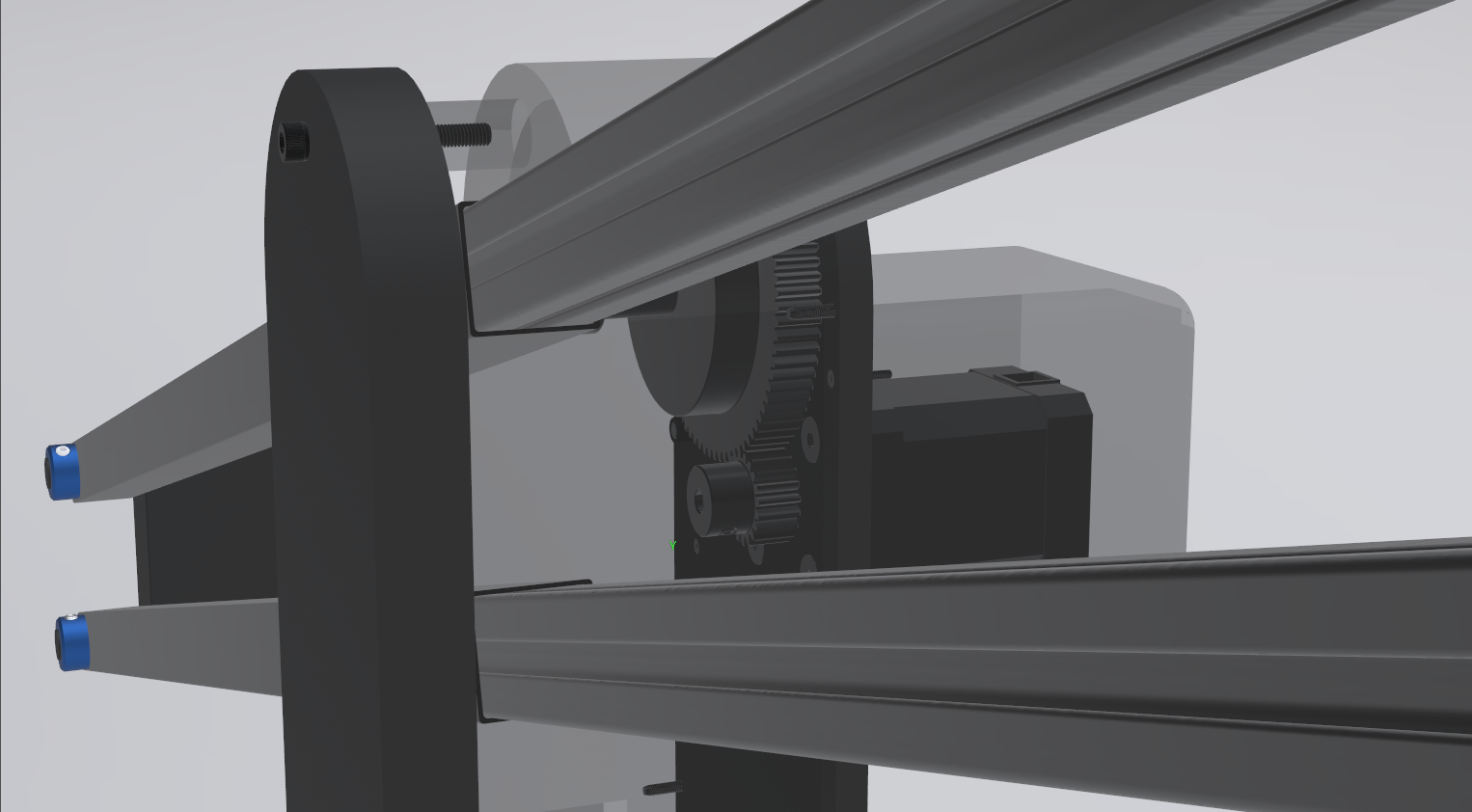
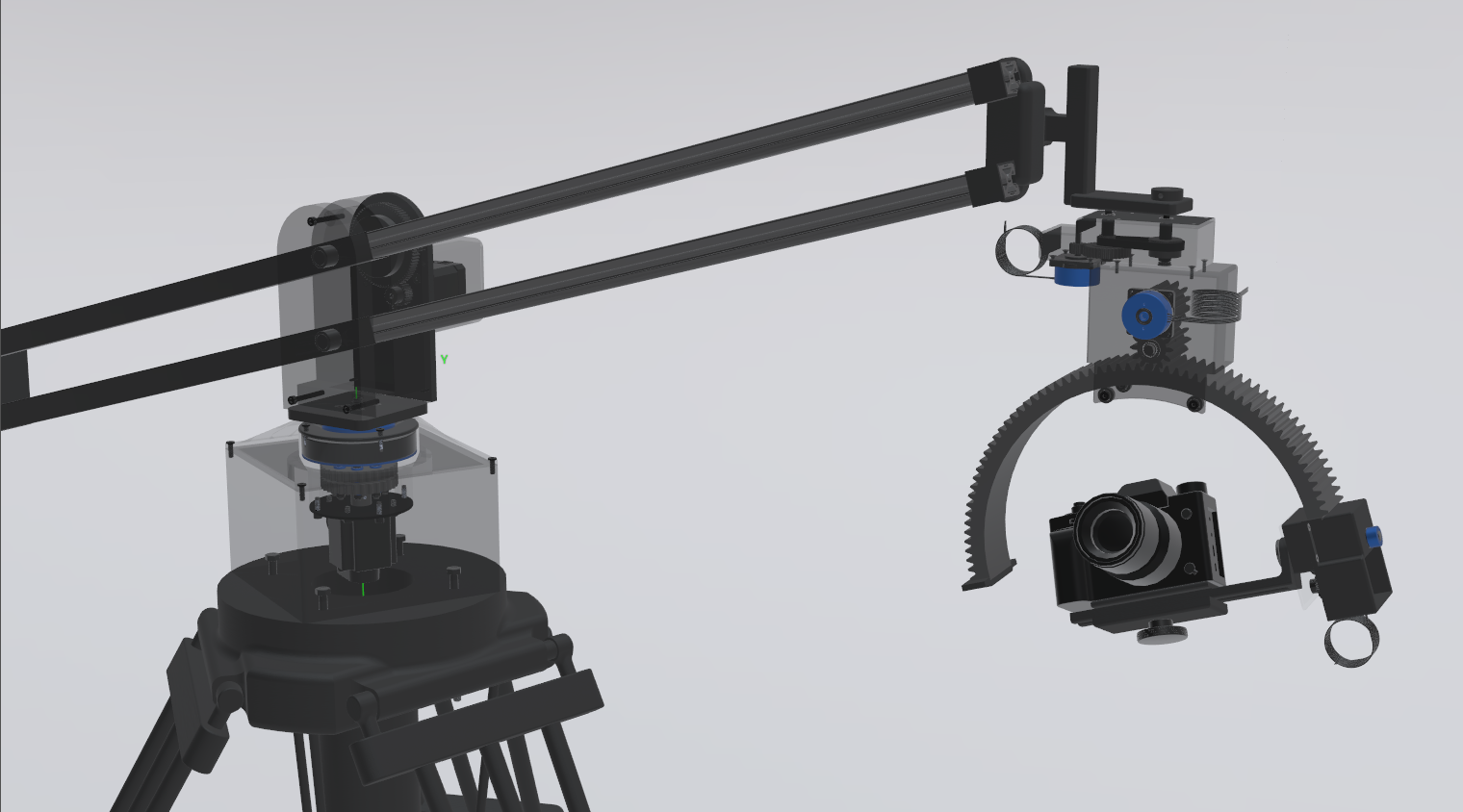
This project continues the same mission that drives most of my engineering work: taking ambitious, professional-grade technology and making it accessible, well-designed, and actually usable. Our goal for this course project was to merge ideas from industrial robotics, hobbyist arms, and high-end cinematography rigs into a standalone 5-DOF system that could serve creators who don’t have a Hollywood-level budget.
Outcomes & Contributions
Throughout the project, my responsibilities concentrated on the foundational systems that make the entire arm functional:
Engineering Research & Requirements
I led the early-stage technical research on structural loads, tripod stability, Mitchell-mount interfaces, torque and weight considerations, and commercial design benchmarks.
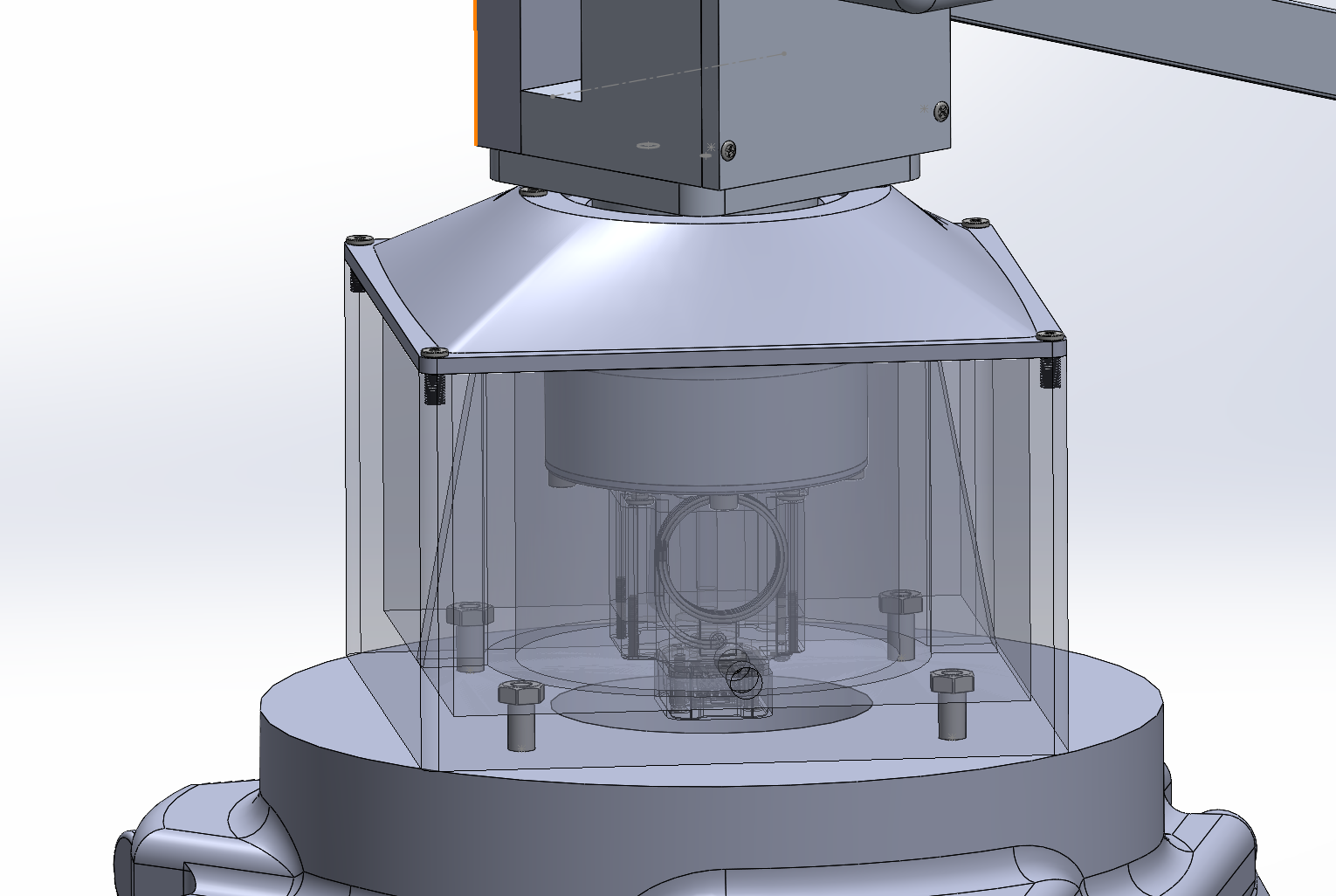
Additionally did research on finding a compact way to achieve an immense torque increase from a standard NEMA 23 motor—and developed a custom 30:1 cycloidal drive mounted at the base of the tripod connecting to the arm, which required doing stuff like:
Establishing the geometric parameters for the disc, eccentricity, lobes, and pin arrangement
Selecting bearing configurations, pin diameters, and clearance pockets to handle off-axis loading and ensure smooth cycloidal motion
The resulting drive allowed the arm’s upper assembly to move independently of the tripod and provided the torque density the rest of the system depended on with reasonable speed and acceleration
Design Report & Documentation
I wrote key sections of our engineering report, including mechanical justification, design rationale, failure considerations, and manufacturing feasibility.Mechanical Design & Modelling
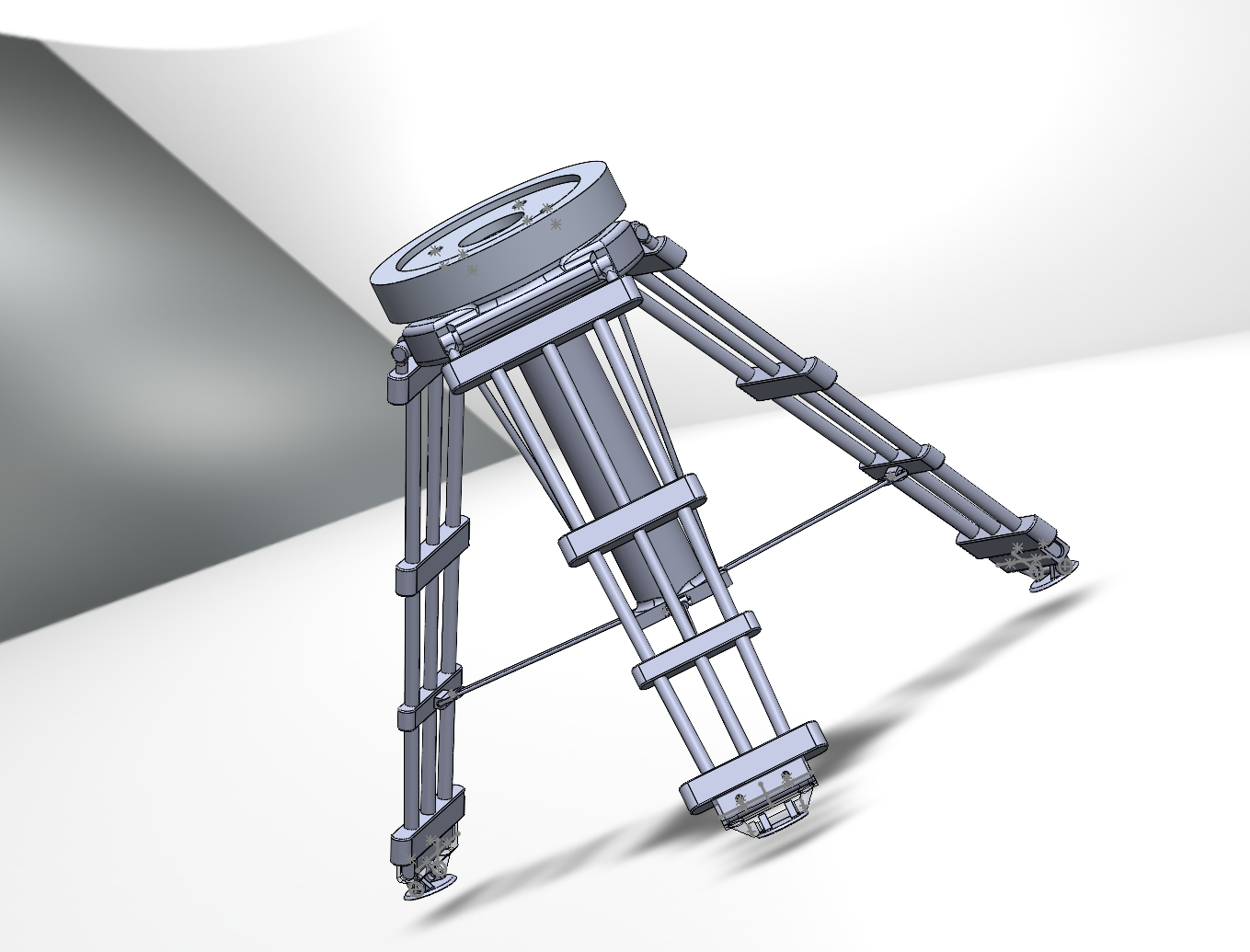
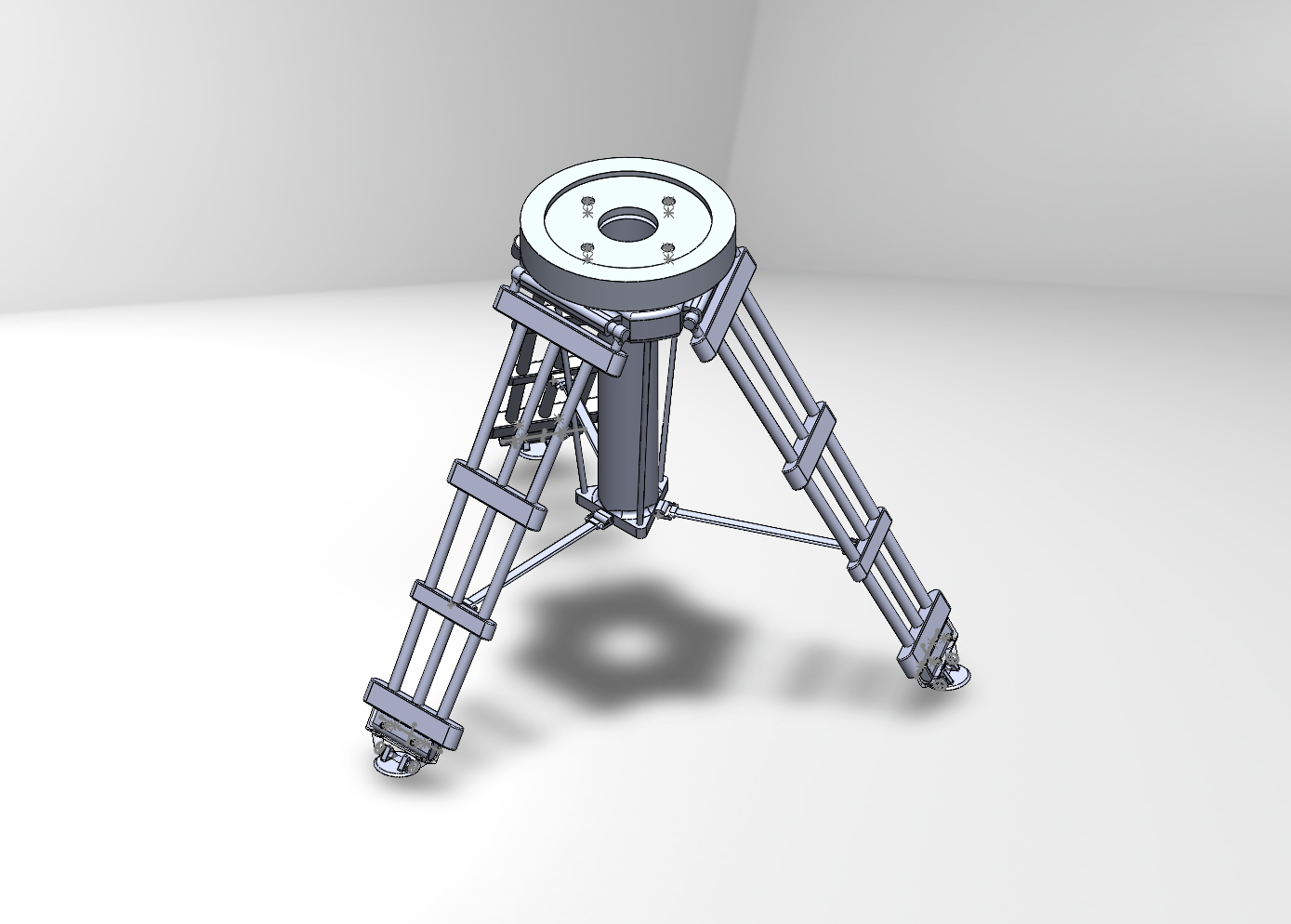
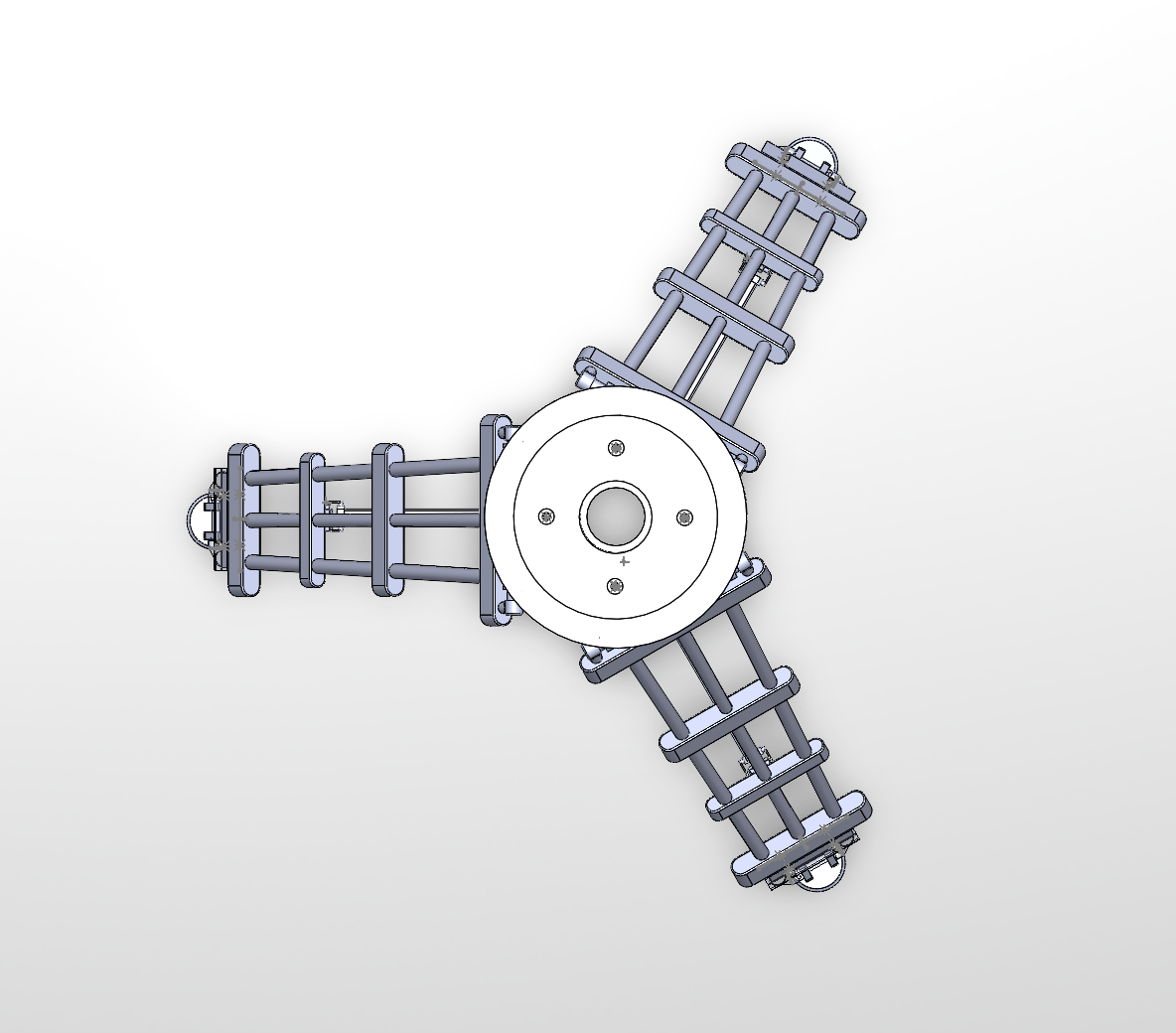
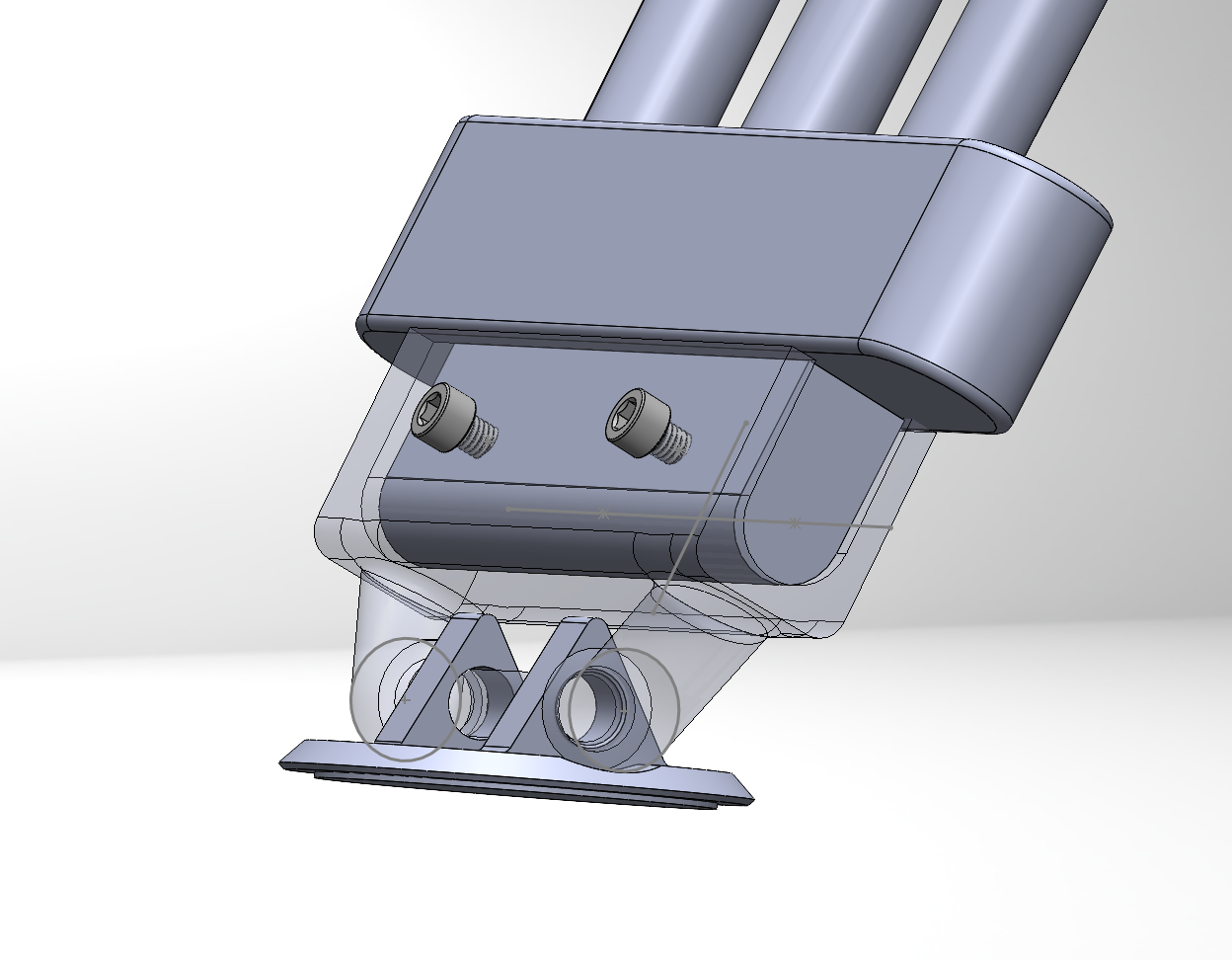
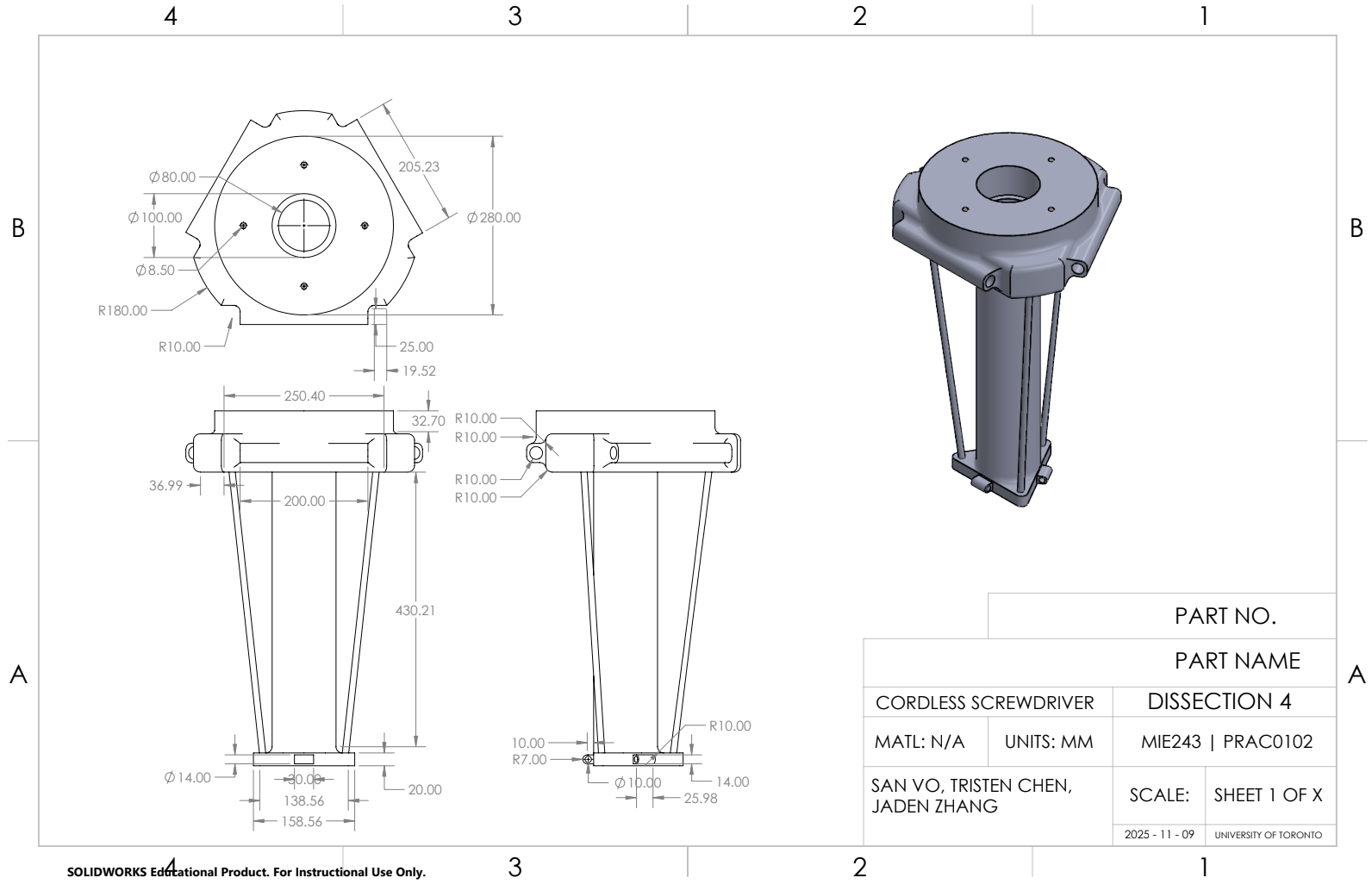
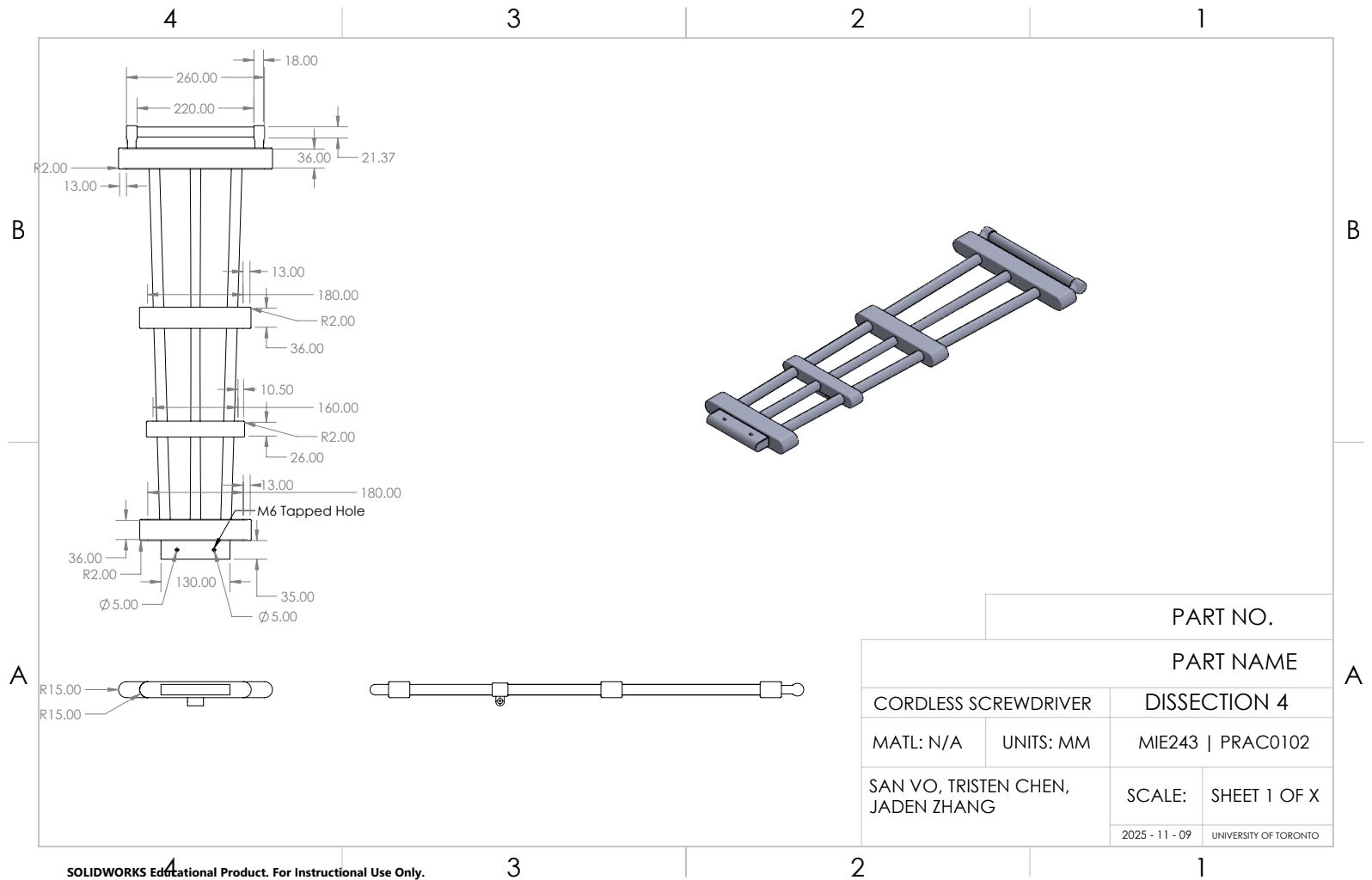
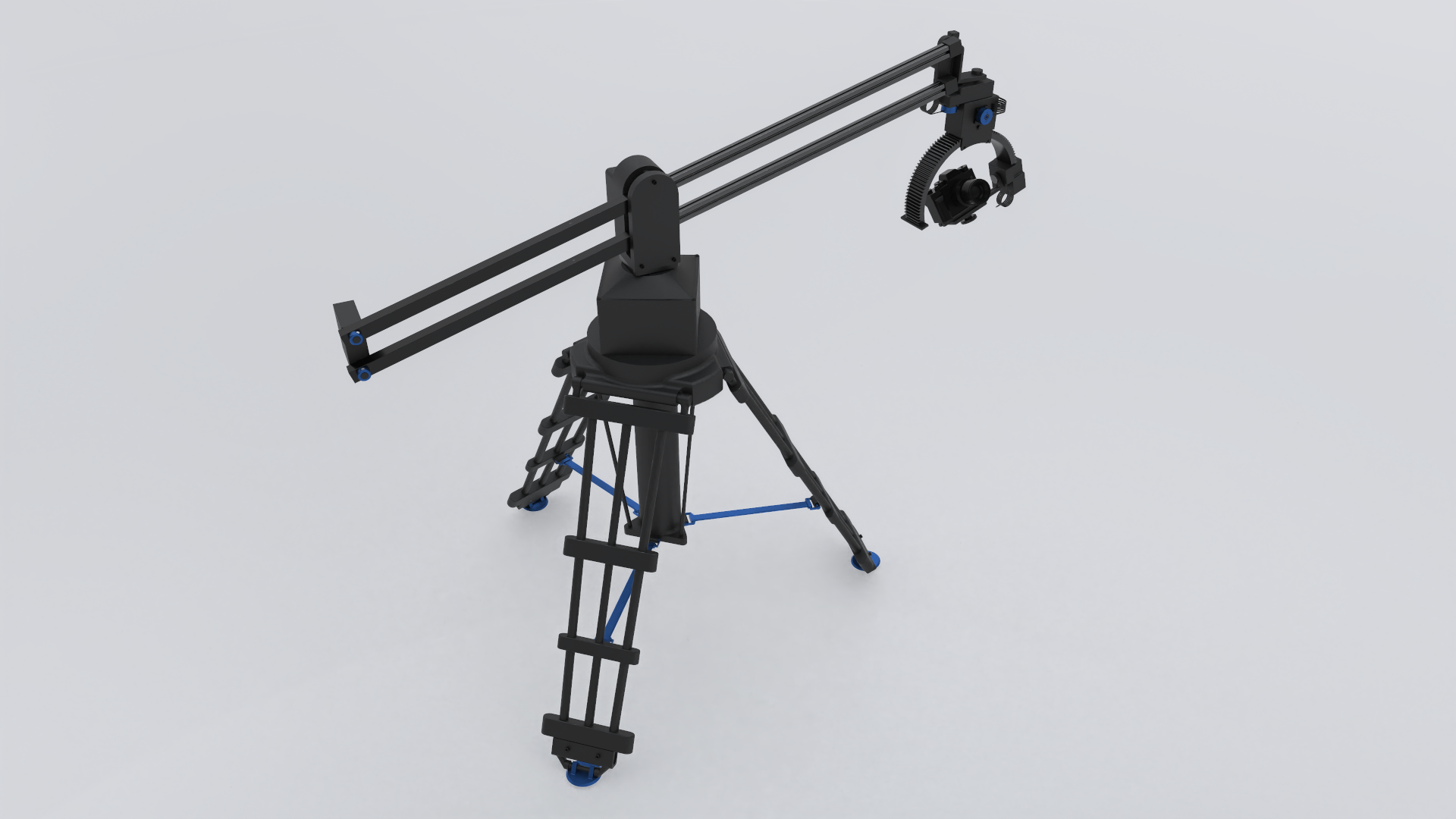
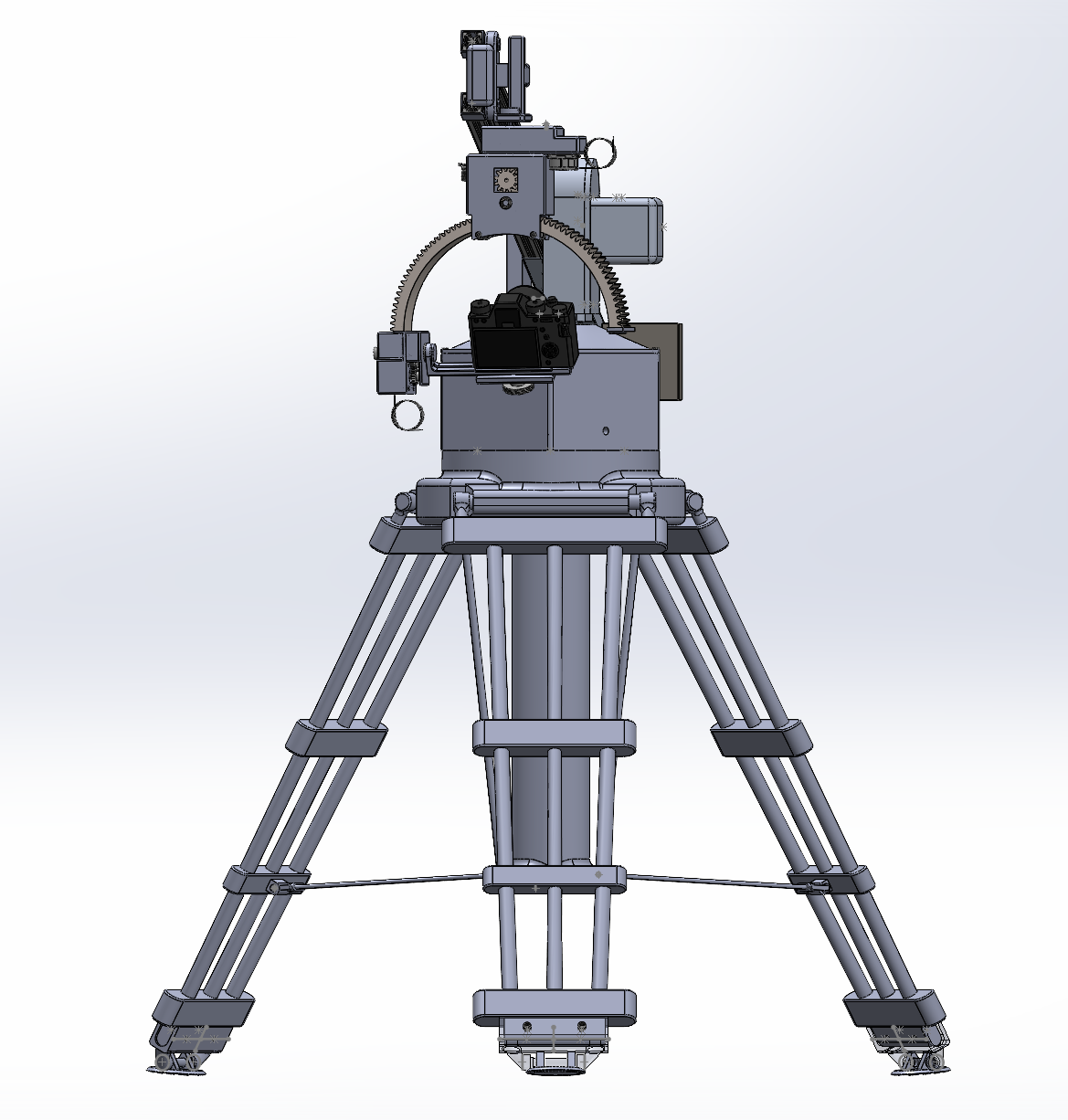
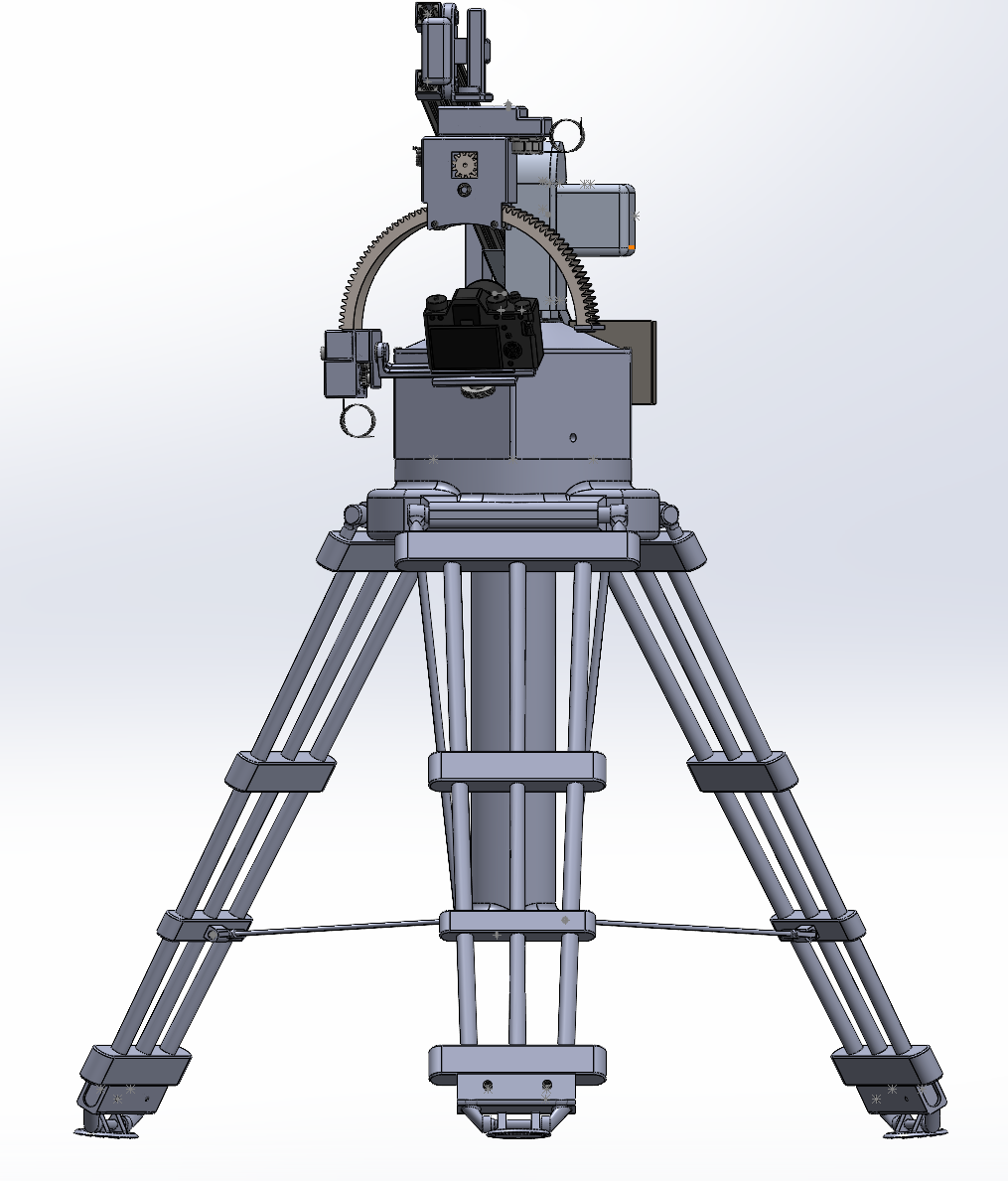
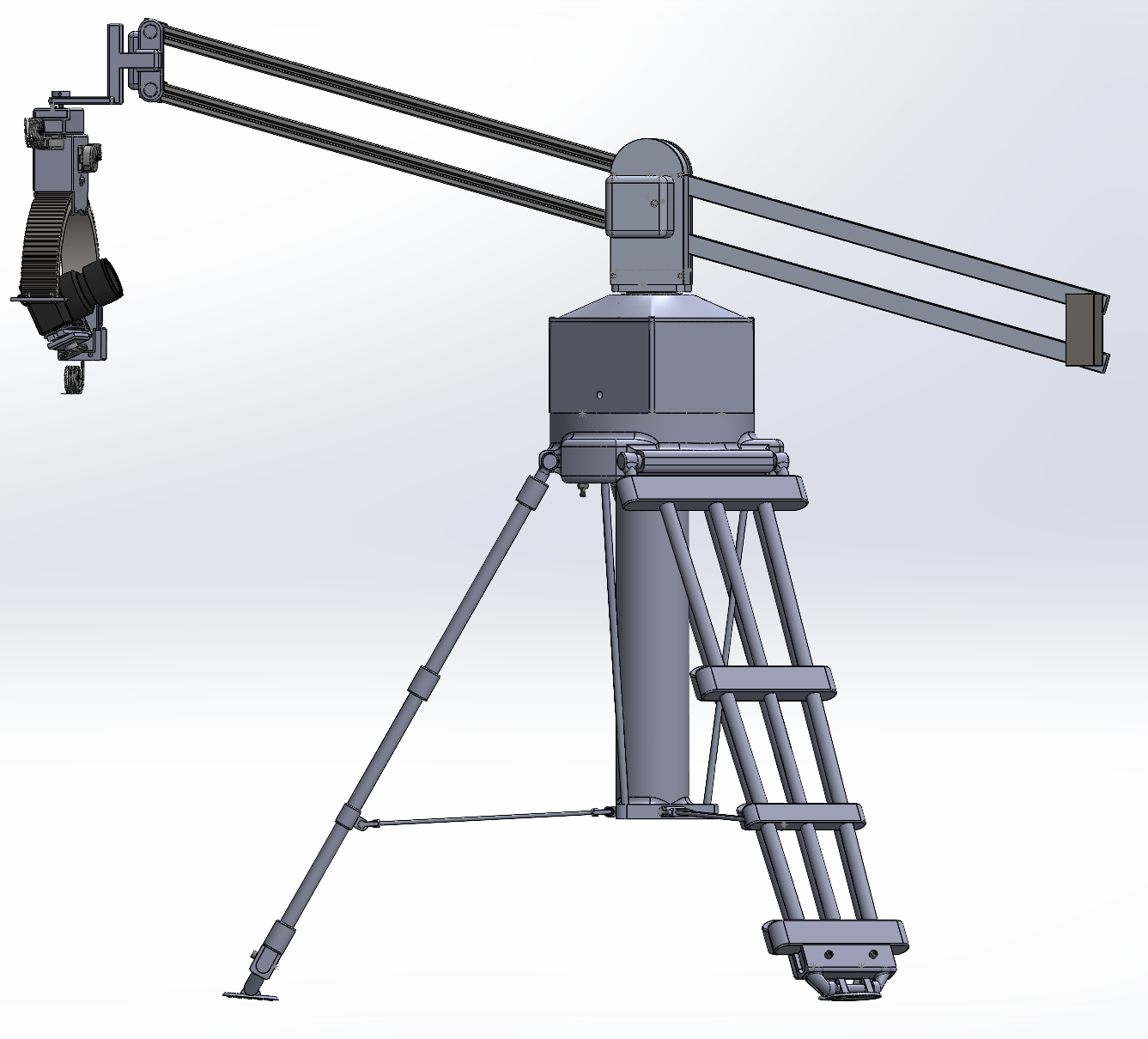
I created and assembled the entire tripod base for the arm—our structural foundation—designing a heavy-duty folding system with full compatibility for a standard Mitchell mount; I also designed the core cycloidal drive that allows the upper arm to move independently from the tripod base.Prototyping & Testing Prep
I validated clearances, interference checks, loading paths, and manufacturability constraints to ensure the system could realistically be fabricated and endure field use.
Technical Details & Skills
SolidWorks 2024 Parametric Modeling
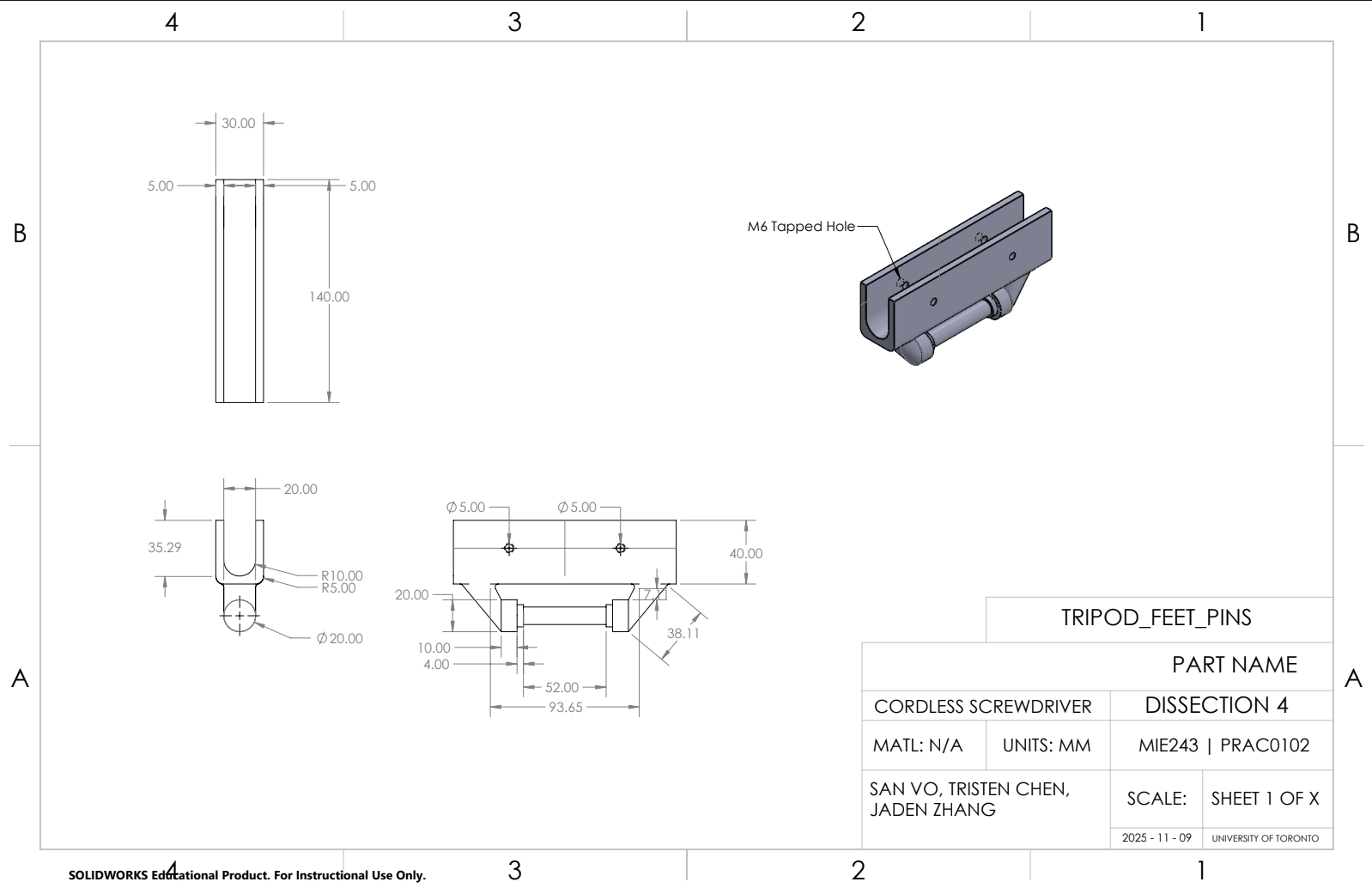
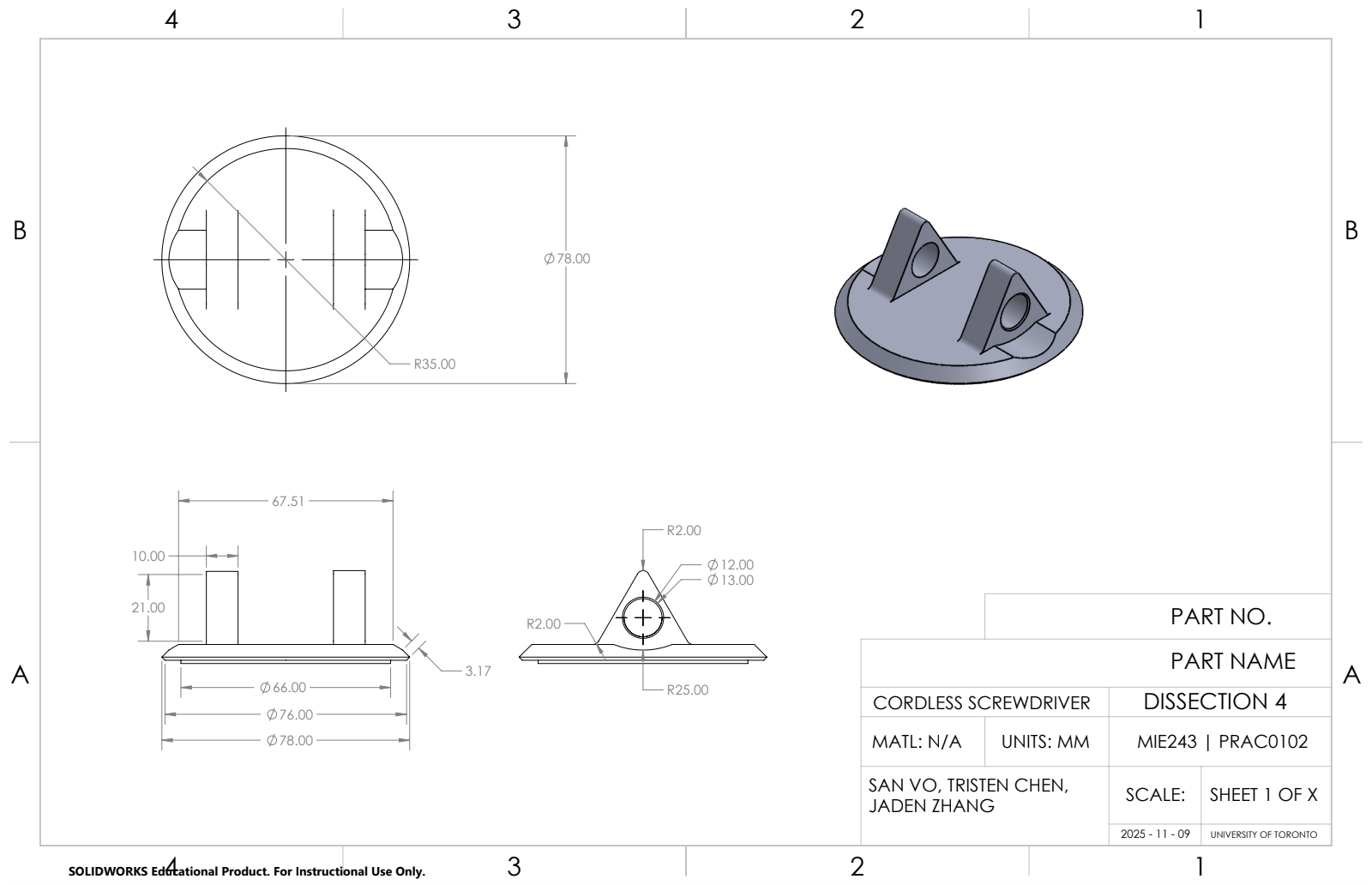
Designed the base assembly from scratch—including leg geometry, truss frames, hinge mechanisms, locking tabs, braces, fastener patterns, and the Mitchell-mount interface. Used advanced techniques such as multi-body modelling, top-down assembly design, fit-for-manufacture constraints, and custom mates.Engineering Drawings & GD&T
Produced detailed drawings with proper tolerancing, hole callouts, and reference datums for machining workflows.Structural Reasoning & Load Path Design
Designed the tripod for vertical axial loading, torsional rigidity, and off-axis moment stability under dynamic arm motion. Considered buckling, shear loading in supports, and joint tolerances at full extension.Fasteners, Mounting Standards, and Hardware Integration
Selected fasteners based on shear vs. tensile requirements, torque-to-clamp-load relationships, and manufacturing availability. Designed thread callouts, counterbores, and clearance holes using the Hole Wizard so the assembly could actually be built.Kinematic Awareness for a 6-DOF System
Modelled the base to accommodate rotational sweep, collision envelopes, and center-of-mass constraints for the moving arm above.Standards-Compatible Cinematography Interface
Implemented a universal Mitchell mount with accurate dimensions, bolt patterns, and indexing features to ensure compatibility with industry-standard heads and accessories.
The Teamwork Aspect
Across this project, a big part of my contribution came from how effectively our team worked together. We divided the system into clear subsystems early on—mechanical design, analysis, documentation, and testing—and I took responsibility for the structural and mechanical foundations. That meant I spent a lot of time coordinating with teammates whose work depended on mine, especially those designing higher-level components that mounted onto the base assembly.
Most of our progress came from tight communication loops: hour-long (but fun) meetings in Myhal (one of UofT’s engineering buildings) to resolve interface questions, sharing partial models early so teammates could check fits and tolerances, and giving each other feedback before major deliverables. One thing I noticed about my own teamwork throughout the project was that my strength naturally showed up in relational and communication areas—keeping discussions productive, making sure decisions were clear, and helping translate mechanical constraints into actionable tasks for other people.
At the same time, I was pushed to improve in areas I’ve historically been weaker in, especially organizational behaviours like time management and workflow planning. Because so much of the project depended on the base assembly being delivered on schedule, I had to be more intentional about breaking down work, communicating progress transparently, and getting my parts uploaded on time. It paid off—our group consistently hit our internal deadlines, and the integration stage went far smoother than any of us expected.
